You receive three quotations for adult diapers. One is $0.18 per piece, another is $0.22, and a third is $0.27. All three manufacturers claim to offer high-quality products with SAP cores and wetness indicators. At first glance, the lowest price may seem like the obvious choice. However, unit price alone rarely tells the whole story.
An FOB quotation reflects a combination of raw materials, manufacturing conversion, packaging, tooling, overhead, and profit margin. Without understanding these cost components, buyers cannot determine whether a lower quotation comes from genuine manufacturing efficiency or reduced product specifications, such as lower SAP dosage, thinner backsheet film, or a smaller absorbent core.
These differences may not be obvious from an initial product sample, but they can affect absorption performance, wearing comfort, customer satisfaction, and after-sales costs once the order reaches the market.
This guide explains the main cost components of adult diapers, how minimum order quantity (MOQ) affects unit pricing, and what B2B buyers should compare when evaluating FOB quotations. It also looks at how manufacturing scale, laboratory testing, and quality management contribute to consistent product specifications. For an overview of available products, visit our adult incontinence care products page.
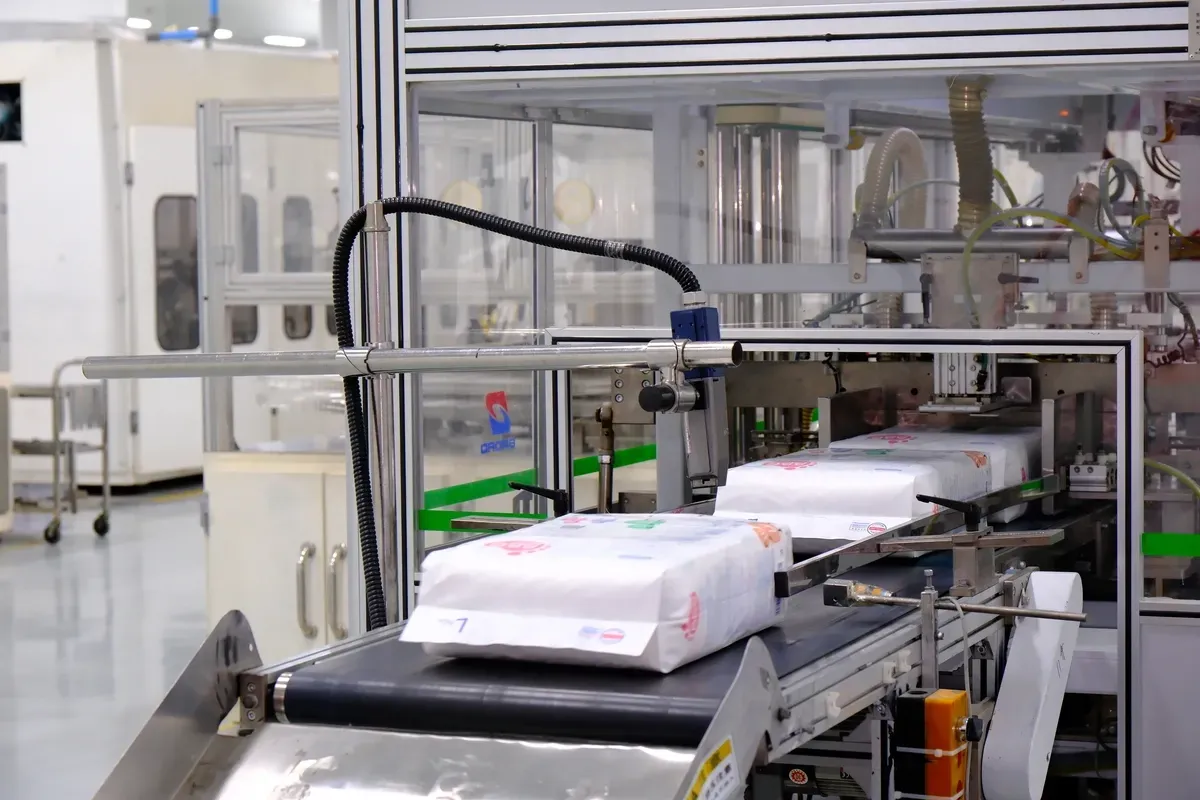
The Cost Structure of an Adult Diaper
An adult diaper FOB price generally consists of five major cost components. Understanding how each component contributes to the total cost helps buyers evaluate quotations more accurately and identify opportunities for cost optimization.
| Cost Component | Indicative Share | Main Cost Drivers |
|---|---|---|
| Raw Materials | 55–70% of ex-factory cost | SAP grade and dosage, fluff pulp weight, nonwoven materials, backsheet film, hot-melt adhesive, and elastic components. |
| Conversion Costs | 8–15% | Production line speed, machine complexity, labor, shift staffing, and energy consumption. |
| Packaging | 6–12% | Bag film thickness, printing colors, carton specifications, and units per package. |
| Manufacturing Loss | 3–6% | Production run length, changeover waste, defect rates, and manufacturing experience. |
| Overhead, QC and Margin | 8–15% | Manufacturing scale, certification requirements, quality management, R&D allocation, and target profit margin. |
These figures are indicative industry ranges rather than a fixed cost model or a breakdown of any specific manufacturer's quotation. The percentages may vary according to product specifications, material selection, production efficiency, and factory operating structure. Because the ranges are independent estimates, their upper or lower limits should not be added together as though they represent one actual cost structure.
For example, a premium adult diaper using a higher-grade SAP and breathable backsheet film may have a higher material cost than a standard product. A more complex design may also require additional production time and quality checks. In most cases, however, raw materials remain the largest component of manufacturing cost.
For buyers, the important question is not simply how much each cost category represents. It is whether the manufacturer can maintain the agreed material specifications, production efficiency, and quality standards throughout the order.
SAP and Fluff Pulp: The Biggest Material Cost Drivers
Superabsorbent polymer (SAP) and fluff pulp are two of the most important materials in adult diaper manufacturing. Together, they can account for approximately 40–55% of total material costs, depending on the product structure and absorbency requirements. Their dosage and configuration influence both product performance and manufacturing cost.
For reference, an adult diaper in size L may use approximately 18–35 g of SAP per piece, depending on its target absorbency level and core design. Products designed for different usage scenarios can have substantially different absorbent structures. An absorbency target of 2,200 ml is not directly comparable with one of 3,800 ml unless the test method and product specifications are also considered.
The balance between SAP and fluff pulp matters as much as the individual material quantities. SAP contributes to liquid absorption and retention, while fluff pulp helps distribute liquid through the absorbent core. The core configuration, material distribution, and product construction all influence the final performance.
Even a small adjustment in material dosage can create a significant cost difference at scale. For example, reducing SAP consumption by 2 g per piece across an order of approximately 120,000 pieces represents 240 kg of SAP. The potential material saving must, however, be evaluated alongside the product's required absorption and retention performance.
Reducing SAP dosage without adjusting the absorbent core design or validating product performance can create problems. Lower material costs may be accompanied by increased rewet, reduced liquid retention, slower liquid distribution, and a higher risk of leakage complaints.
How Easy Hygienic Evaluates Absorbent Core Performance
At Easy Hygienic, material selection is considered together with finished-product performance. Our 1,600 m² CNAS-accredited laboratory supports product testing and quality evaluation, including absorption-related performance, rewet, retention, and infiltration rate testing.

This testing capability helps the team assess whether a proposed material configuration meets the agreed product requirements. Rather than evaluating a product solely by its nominal SAP dosage, buyers and manufacturers can consider how the complete absorbent structure performs under relevant test conditions.
Our quality management approach also incorporates more than 350 quality control checkpoints across manufacturing and inspection processes. These checks help monitor key product and process requirements, supporting consistency between approved samples and mass production.
When comparing adult diaper quotations, buyers should ask manufacturers to provide:
- SAP grade and dosage per piece
- Fluff pulp weight per piece
- Target absorption capacity and the applicable test method
- Absorbent core configuration
- Rewet, retention, and infiltration performance requirements
- Relevant product performance test results
Two products described as having an SAP core may contain substantially different amounts of absorbent polymer and use different core structures. Comparing actual specifications and test results is therefore more meaningful than comparing material descriptions alone.
Nonwoven and Backsheet Film Selection
The topsheet nonwoven and backsheet film are another important material cost category. These materials influence product softness, liquid transfer, breathability, and overall wearing comfort.
Spunbond or spunmelt nonwoven materials used in different product layers may have basis weights ranging from 18 to 25 gsm. Lower-basis-weight materials can reduce material consumption, but buyers should also consider softness, strength, liquid transfer performance, and the role of each layer in the product structure.
Backsheet selection is equally important. Standard PE film and breathable PE film differ in material construction and performance characteristics. Breathable films may have a higher moisture vapor transmission rate (MVTR), which can help improve wearing comfort by allowing greater moisture vapor transmission.
When a quotation is significantly below competing offers, buyers should verify whether the manufacturer has changed the material specifications. A lower price may reflect thinner nonwoven, a different backsheet construction, or other material substitutions.
Before approving a quotation, request the following information:
- Nonwoven type and basis weight (gsm)
- Backsheet material type and thickness
- Whether the backsheet is breathable or non-breathable
- MVTR data, where applicable
- Material specifications for the approved product sample
Material optimization should be based on the intended product positioning and target market requirements. A lower material cost is not necessarily a better commercial decision if it compromises product performance or customer satisfaction.
Design Complexity and Production Line Efficiency
Adult diaper design also influences manufacturing cost. Additional product features may require more processing steps, more complex equipment configurations, or adjustments to production line speed.
A relatively simple flat-core adult diaper may run at approximately 300–400 pieces per minute on a suitable production line. Adding features such as a high-waist elastic waistband, wider absorbent core, standing leak guards, wetness indicator, or rear adhesive tape may increase manufacturing complexity and reduce production speed by 15–30%. These figures are illustrative and depend on the equipment, product design, and production conditions.
Production changeovers also affect cost. Switching between different sizes or product configurations may require equipment adjustments, material replacement, and trial production. Each changeover can generate 30–90 minutes of adjustment time and associated material waste, depending on the line and product requirements.
How Manufacturing Scale Supports Production Planning
Manufacturing capacity is one factor buyers should consider when evaluating an OEM partner. Easy Hygienic operates more than 35 automated production lines, supporting the production planning of different adult incontinence product configurations and order volumes.
A broader production setup can provide more options for coordinating product specifications, production schedules, and order quantities. It does not mean every customized product can be produced at the same speed or MOQ. Actual arrangements still depend on the product structure, material availability, packaging requirements, and production schedule.
For buyers developing customized adult diapers, it is important to balance product features with manufacturing efficiency. Not every additional feature delivers enough market value to justify its effect on production cost.
Discussing the product structure and intended market positioning with the manufacturer before finalizing specifications can help identify a more practical balance between functionality, production efficiency, and cost.
Pack Count and Packaging: Their Impact on Unit Economics
Packaging affects adult diaper pricing in several ways. Although packaging may represent a smaller share of total manufacturing cost than raw materials, its impact becomes significant when order quantities and shipping volumes increase.
1. Packaging Material and Printing
A four-color printed PE pouch generally costs more than a plain or single-color bag. Laminated packaging can add further material and processing costs. Buyers should consider whether the packaging specification is necessary for the target retail channel, particularly during initial market testing.
2. Units Per Package
The number of diapers in each package affects the packaging cost allocated to every individual piece. For example, a package containing 10 size-L diapers may use approximately the same bag film as a package containing 8 pieces. However, the bag cost is distributed across more units in the larger pack.
3. Master Carton Configuration
Outer carton design influences both packaging expenses and container utilization. A 4-ply carton containing 48 pieces may offer different loading efficiency compared with a 6-ply carton containing 24 pieces, depending on carton dimensions, product arrangement, and stacking requirements.
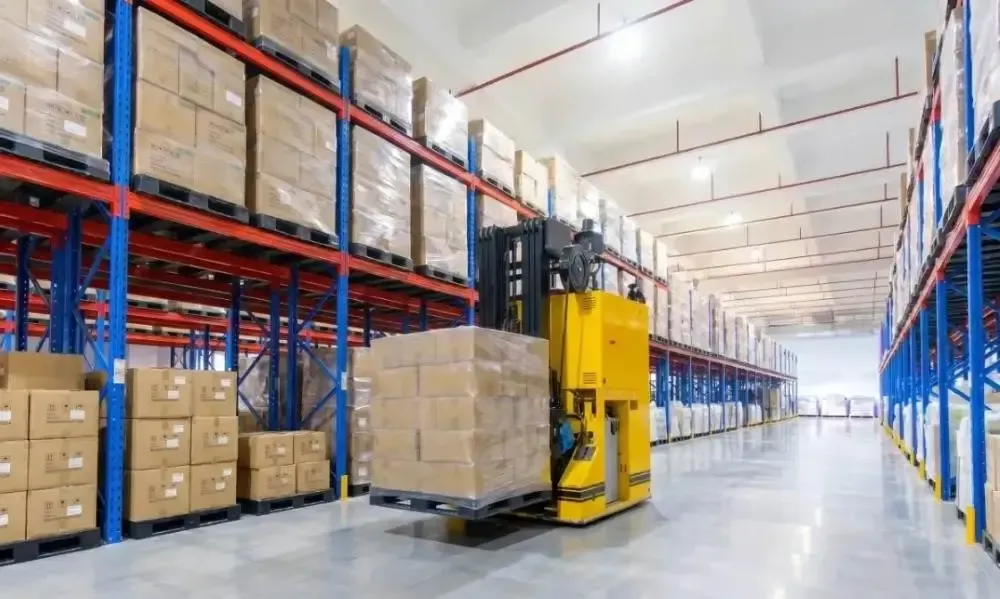
For private label projects, packaging should be evaluated together with shelf presentation, product protection, warehouse handling, and international freight requirements.
Optimizing packaging configuration can help reduce the overall cost per piece without changing the core product specifications. It can also improve container utilization, which becomes particularly important for buyers importing larger quantities.
MOQ Economics: Why 5,000 and 50,000 Pieces Have Different Prices
The price difference between a 5,000-piece order and a 50,000-piece order is not simply a volume discount. It is largely related to how fixed manufacturing and setup costs are distributed across the total production quantity.
Smaller orders generally carry a higher unit cost because several expenses remain relatively fixed regardless of production volume:
- Machine setup: Equipment preparation, adjustment, and trial production require time and labor.
- Changeover waste: Material consumed during production adjustments is distributed across fewer finished pieces.
- Packaging MOQ: Printed packaging materials may have their own minimum production quantities. For example, a printed bag film order may require a quantity equivalent to 30,000–50,000 pieces to justify printing setup and material preparation.
- Production scheduling: Short production runs may be less efficient to schedule than established high-volume orders.
As an illustrative industry comparison, the same product ordered at an MOQ of 5,000 pieces may cost 15–30% more per piece than an order of 50,000 pieces. This is not a universal pricing rule. The actual difference depends on the product specification, packaging method, material procurement, production schedule, and manufacturer's cost structure.
The raw material price may remain unchanged, but setup costs, packaging preparation, and other fixed expenses are allocated across a smaller number of finished products.
Lead time can also vary with order size and production scheduling. For example, a smaller trial order may require 45 days rather than 25 days if packaging preparation, material procurement, or production scheduling takes additional time. These are illustrative planning scenarios, not guaranteed lead times.
At Easy Hygienic, more than 35 automated production lines provide a manufacturing base for coordinating different production requirements. Our team can review product specifications, order quantities, and packaging needs to assess practical production arrangements for trial and repeat orders.
For buyers entering a new market, it is useful to request a tiered quotation showing prices at different order quantities. This makes it easier to evaluate the financial difference between a trial order and a regular purchasing program.
Tooling, Printing Plates and Artwork Costs
Private label adult diaper projects may involve additional one-time costs that are not always included in the initial unit price.
Common examples include:
- Printing cylinders: Bag film printing cylinders may cost approximately $150–$350 per color group, depending on plate dimensions and printing requirements.
- Die-cut tools: Customized package shapes or special cutting requirements may involve additional tooling costs of approximately $200–$800.
- Artwork and prepress: Packaging design adjustments, file preparation, color matching, and proof approval may be charged separately.
These figures are indicative examples only. Actual charges depend on the printing process, packaging material, design complexity, and the arrangements agreed with the packaging manufacturer.
These costs are generally one-time investments. Depending on the agreement, buyers may pay them upfront or have them amortized across the agreed order quantity.
When requesting an OEM quotation, buyers should clarify:
- Which tooling and printing costs are included in the quotation
- Whether artwork and prepress services are charged separately
- How one-time costs are allocated across repeat orders
- Who owns the printing plates and tooling after the cooperation ends
Transparent cost breakdowns help buyers understand the actual financial commitment of a private label project and avoid unexpected expenses during repeat orders.
Freight, Trade Terms and Landed Cost
FOB price is not the same as the final cost of receiving adult diapers at the buyer's warehouse. Under FOB terms, the seller is generally responsible for the goods and export clearance up to the agreed port of shipment, while the buyer arranges the main international transportation and subsequent costs in accordance with the agreed Incoterms.
The total landed cost may include:
- Ocean freight
- Cargo insurance, where applicable
- Destination port handling
- Customs duties and applicable taxes
- Customs clearance charges
- Inland transportation to the warehouse
Adult diapers are relatively lightweight but occupy considerable shipping volume. As a result, container utilization and carton configuration can have a significant influence on freight cost per piece.
A 40 ft HQ container may accommodate approximately 60–85 CBM of cargo space, depending on the container's usable capacity, packaging dimensions, carton configuration, and loading arrangements. Actual loading quantities should be confirmed through a packing plan rather than estimated from volume alone.
A manufacturer offering a slightly higher FOB price may still provide a lower landed cost if its packaging configuration allows more pieces to fit into each container. Conversely, inefficient carton dimensions can increase freight expenses even when the unit price appears attractive.
When comparing quotations, ask manufacturers to provide:
- Carton dimensions and gross weight
- Loaded CBM per 10,000 pieces
- Estimated pieces per 40 ft HQ container
- Loading configuration and stacking information
- Applicable trade terms and shipment responsibilities
Comparing landed cost per piece provides a more realistic basis for evaluating competing offers than relying on FOB prices alone.
How to Reduce Adult Diaper Costs Without Compromising Quality
Reducing procurement costs does not necessarily mean choosing cheaper materials or lowering product specifications. In many cases, buyers can improve cost efficiency through better product planning, packaging optimization, and production scheduling.
Five practical approaches are worth considering:
1. Match Product Specifications to the Intended Use
Not every adult diaper needs the same absorbency level. A daytime product may require a different absorbent core configuration from an overnight product. Matching the SAP dosage and core structure to the intended application helps avoid unnecessary material costs while maintaining the required performance.
2. Simplify Packaging for Trial Orders
For initial market testing, consider plain bags and standard cartons instead of immediately investing in customized printed packaging. Once market demand and reorder quantities become more predictable, buyers can move to fully customized private label packaging.
3. Optimize Carton Loading
Review carton dimensions, pack counts, and loading arrangements with the manufacturer. Improving the number of pieces loaded per container can reduce freight cost per unit without changing the product's material specifications.
4. Consolidate Orders and Reduce Changeovers
Where product specifications allow, combining SKUs that share similar core structures, materials, or packaging configurations may reduce production changeover frequency and manufacturing waste.
5. Review Production Scheduling
Discuss production availability and scheduling flexibility with the manufacturer. Orders placed during less congested production periods may offer more flexible lead times and planning arrangements, depending on factory capacity.
However, some cost-cutting approaches should be avoided. Reducing SAP below the required performance level, switching to non-breathable film without reviewing the intended product positioning, or reducing essential quality inspection activities can create additional costs through product complaints, returns, and lost repeat orders.
Why Quality Control Matters When Optimizing Costs
Cost optimization only creates long-term value when the approved product specification is maintained during mass production. A lower material cost is not a genuine saving if it leads to inconsistent absorbency, leakage, poor fit, or a higher defect rate.
Easy Hygienic's quality management approach combines laboratory testing, manufacturing inspection, and process monitoring. More than 350 quality control checkpoints support inspection across production stages, while AI-based camera inspection helps identify visible product defects during manufacturing.
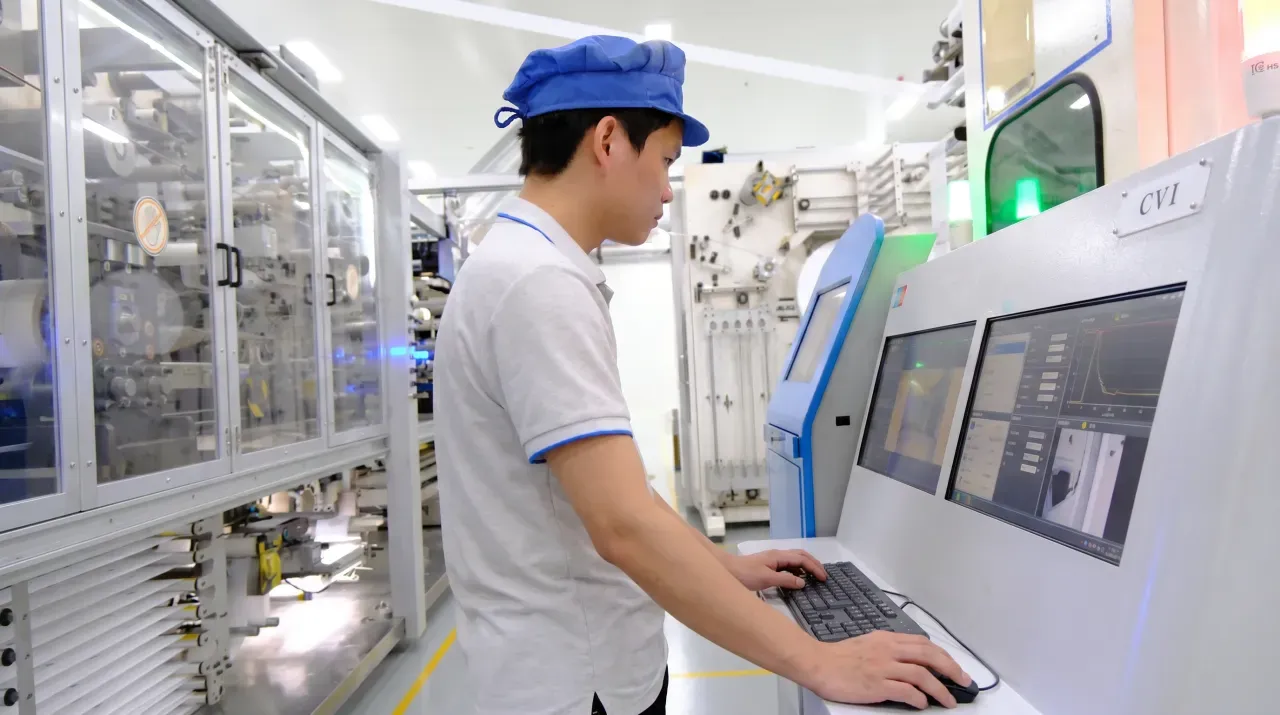
Digital manufacturing systems, including MES, WMS, and QMS, support coordination between production, warehouse operations, and quality management. Together, these processes help provide greater visibility into manufacturing operations and product quality records.
For B2B buyers, this matters because a reliable OEM partner should be able to do more than offer a competitive initial quotation. The manufacturer should also have processes to monitor product consistency, investigate quality issues, and maintain agreed specifications across repeat orders.
How to Read and Compare Adult Diaper Quotations
A useful adult diaper quotation should provide enough technical and commercial information for buyers to compare different manufacturers on an equivalent basis.
Before evaluating the quoted unit price, check whether the quotation addresses the following questions:
- Is the product specification complete? Check size, SAP dosage per piece, fluff pulp weight, nonwoven gsm, backsheet type, absorbency target, and rewet requirements.
- Which trade term is being quoted? Confirm whether the price is EXW, FOB, CIF, or DDP and whether packaging is included.
- Are tooling and artwork costs itemized? Identify printing plates, customized packaging, and other one-time expenses.
- What is the MOQ? Request pricing at the next order quantity or volume tier to understand potential savings.
- How long is the quotation valid? A 30-day validity period may be used as a commercial reference, although actual validity depends on raw material and market conditions.
- Which currency is used? Clarify the currency and whether exchange-rate adjustments may affect the final price.
- What is the production lead time? Confirm the estimated production schedule and whether the required production slot is available.
- How is product quality verified? Ask about the manufacturer's inspection process, testing capabilities, and quality documentation.
If a quotation provides only a single unit price without an attached product specification, buyers should request a detailed technical sheet before making comparisons.
It is also worth understanding how the manufacturer manages quality during mass production. For example, buyers can ask whether the manufacturer has in-house laboratory testing, defined inspection checkpoints, and a process for monitoring product consistency between production batches.
The most reliable comparison is based on equivalent product specifications, packaging configurations, order quantities, quality requirements, and trade terms. This makes it easier to identify genuine cost advantages rather than simply selecting the lowest number.
Adult Diaper Cost and MOQ: Frequently Asked Questions
Why do two manufacturers quote very different prices for the same adult diaper?
Because products described as the same adult diaper may have different technical specifications. Common reasons for price differences include SAP dosage, fluff pulp weight, nonwoven gsm, backsheet breathability, package count, and manufacturing efficiency.
For example, a $0.18 product containing 8 g of SAP with non-breathable film is not directly comparable to a $0.24 product containing 13 g of SAP with breathable film. These figures are illustrative examples, not market benchmarks. Buyers should compare the technical specifications and evaluate total cost of ownership, including potential complaints and returns, rather than focusing only on unit price.
What is the minimum order quantity for private label adult diapers?
There is no universal MOQ for private label adult diapers. The actual requirement depends on the manufacturer's production setup, product configuration, packaging design, and material procurement conditions.
As an indicative reference, plain packaging orders may start at approximately 5,000–10,000 pieces per size, while printed packaging may require quantities equivalent to 30,000–50,000 pieces per design to justify printing plate and material preparation costs. These figures are examples only; actual MOQ requirements should be confirmed against the product and packaging specifications.
One practical approach is to begin with a smaller order using standard packaging, then introduce customized printed packaging once market demand and reorder volumes are established. Manufacturers with multiple automated production lines may have more options for coordinating different production requirements, although the final MOQ still depends on the specific project.
Can adult diaper prices be reduced after the first order?
Yes. There are two main ways to improve pricing after the initial order.
The first is increasing order volume. As trial quantities develop into regular production orders, setup costs, changeover expenses, and packaging plate costs can be distributed across more pieces.
The second is specification optimization. After identifying the best-selling SKUs, buyers can review product configurations, consolidate similar sizes, simplify packaging for lower-volume variants, and negotiate packaging materials based on larger production quantities.
For long-term OEM cooperation, buyers can also discuss a 12-month pricing review linked to agreed purchasing volumes. Tracking landed cost rather than FOB price alone provides a more useful measure of purchasing efficiency.
Conclusion
Comparing adult diaper prices based on a single number means comparing products with potentially different specifications and cost structures. Every FOB quotation reflects a combination of SAP dosage, material selection, absorbent core design, packaging configuration, production efficiency, and MOQ requirements.
Buyers who achieve better long-term purchasing value are not necessarily those who select the lowest quotation. They are the ones who provide complete product specifications, understand the major cost components, compare equivalent offers, and negotiate on areas where costs can be optimized without compromising product performance.
For an OEM manufacturing partner, competitive pricing should be supported by more than production capacity alone. Laboratory testing, structured quality checkpoints, and manufacturing process management all contribute to maintaining product specifications during mass production.
At Easy Hygienic, our adult incontinence care manufacturing capabilities are supported by more than 35 automated production lines, a 1,600 m² CNAS-accredited laboratory, and a quality management approach incorporating more than 350 checkpoints. AI-based camera inspection and digital manufacturing systems further support production monitoring and quality management.
If you are planning a new private label adult diaper project, share your target specifications, absorbency requirements, packaging preferences, and expected order quantity with Easy Hygienic. Our team can discuss product configurations, manufacturing requirements, quality expectations, and MOQ-based quotations to help you evaluate a suitable solution for your market.
Explore Easy Hygienic's adult incontinence care products or contact our team to discuss your OEM or private label adult diaper project.