Adult incontinence sizing works on a different logic from baby diapers. There are no age bands and no weight brackets that tell you what fits. The two master parameters are waist/hip circumference and absorbency level, plus the care setting the product is used in. Copying a competitor's adult diaper size chart onto your private label line is the fastest way to generate leakage and refund claims.
This guide gives you a repeatable method for defining a size range and an absorbency ladder that fit your target market, your channel and your users. It is written for importers, aged-care buyers, pharmacy chains and e-commerce operators. See our Incontinence Care page for the full adult product range.
Why Adult Sizing Is Not Baby Sizing
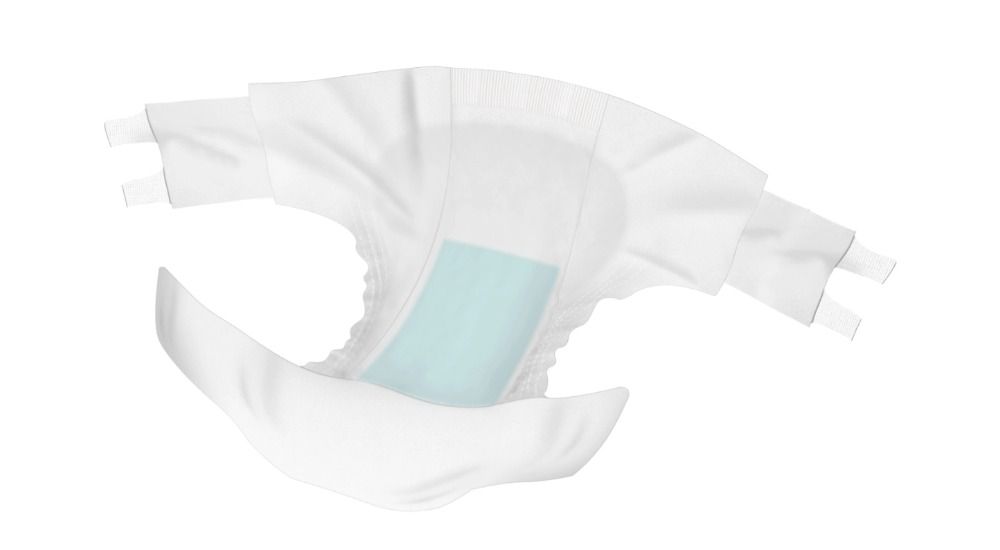
A baby grows in a predictable weight range; an adult does not. Two people of the same body weight can have waist measurements that differ by 20 cm, one with a narrow hip and loose abdomen, the other with a wide hip and firm waist. Weight alone cannot predict fit. The primary sizing parameter for adult tab-style diapers is waist circumference, measured at the navel line.
For pull-up pants, hip circumference and thigh circumference matter as much as waist. The secondary parameter is absorbency, which is matched to the user's condition and care routine rather than to body size. Specify a size range on weight alone and you will under-fit slender users and over-fit bariatric ones.
The Standard Size Range and How It Is Defined
Most adult lines run a five-tier size ladder. The table below shows typical reference waist ranges; your final spec sheet should confirm the exact measurements against your chosen core and elastic configuration.
Size | Typical waist range | Typical product length | Core coverage |
S | 60–85 cm | ~55–60 cm | Standard adult core |
M | 80–115 cm | ~60–65 cm | Standard adult core |
L | 100–140 cm | ~65–70 cm | Extended core |
XL | 120–160 cm | ~70–75 cm | Extended core |
XXL | 140–180 cm | ~75–85 cm | Bariatric-wide core |
These are reference ranges, not fixed Easy Hygienic spec values. At Easy Hygienic, we tailor the size ladder to the body-proportion distribution of your target market rather than defaulting to one domestic chart.
European and North American skews run wider through L and XL; East Asian skews run narrower and taller. We adjust waist elastics, core width and product length per region before mass production. See our Incontinence Care page for current SKU dimensions.

Plus Size and Bariatric Ranges
Plus-size diapers are not simply larger versions of standard sizes. They may require different product structures to accommodate larger body measurements. Bariatric adult diapers typically feature extended waist coverage, wider absorbent cores, stronger leg cuffs and reinforced rear elastic to improve fit and reduce leakage risks. The exact dimensions and material specifications should be determined according to the target size range, product construction and fit-test results.
The care channel for plus-size is heavily weighted to aged-care institutions and home-care distributors rather than self-purchasing retail. Pricing sits in a higher band because material usage per piece is substantially greater and line speed drops on wider formats.
For markets with an older, heavier demographic — notably North America, Northern Europe and the Gulf — a dedicated bariatric SKU (XXL/XXXL) is usually worth carrying even at lower volume, because absence costs you the whole institution contract.
Absorbency Levels Explained
Absorbency is evaluated based on liquid-holding capacity, rather than core grammage alone. Adult incontinence products are commonly marketed in different absorbency levels, such as Light, Moderate, Heavy and Overnight. However, these labels do not follow a universally standardized classification across all brands. The reference ranges below can serve as general guidelines for product development and range planning. Actual absorbency performance depends on the product structure, materials and testing method.
| Level | Reference absorbency | Best for | Typical application |
| Light | 200–400 mL | Occasional or light leakage | Everyday use |
| Moderate | 400–800 mL | Regular daytime incontinence | Daytime use |
| Heavy | 800–1500 mL | Higher-volume incontinence | Extended daytime use or care settings |
| Overnight | 1500–2500 mL+ | Higher absorbency needs and longer wear intervals | Night-time use |
| These ranges are illustrative product development references, not universal industry standards. Buyers should confirm the test method and performance criteria when comparing products from different manufacturers. | |||
It is important to distinguish laboratory absorbency from actual performance during wear. Laboratory test results indicate a product's absorption capacity under specified testing conditions, but they do not directly represent how much liquid the product can reliably retain in everyday use. Body pressure, movement, liquid distribution and rewet performance can all affect the amount of liquid retained during use. Buyers should compare products under the same test conditions and evaluate not only total absorption capacity but also absorption speed, rewet and retention performance under pressure.

Matching Absorbency to Channel
The same absorbency ladder does not sell equally across channels.
Pharmacy and supermarket retail is dominated by light-to-moderate products bought by self-managing users, where discretion, pack appearance and brand credibility matter more than per-piece cost.
Aged-care institutions and hospitals buy heavy-to-overnight products in bulk, where the purchase decision is driven by cost per change, incident rate and nurse handling time rather than packaging aesthetics.
E-commerce sits between: it carries moderate-to-heavy volumes and competes on pack size, discreet delivery and subscription pricing. Build your SKU ladder for the channel you actually serve rather than trying to cover all four with one range.
Tape vs Pull-Up: How Sizing Differs
Tab-style (tape) diapers and pull-up pants are sized on different body parameters even for the same user.
Tape diapers are adjusted at the waist tabs, so the critical measurement is waist circumference and the product length is what keeps the back covered. Pull-up pants are pulled on like underwear, so hip circumference and thigh opening drive fit; a tight thigh opening leaks at the leg, a loose one sags at the crotch. It is common for one user to wear, say, an L tape diaper but an XL pull-up, because their hip measurement exceeds their waist.
Do not force the same size label across both formats; expect a one-size step-up when converting from tape to pull-up on the same wearer.
Regional Sizing Differences
Size charts are not universally interchangeable across markets. In general, European and North American product ranges often offer broader waist measurements in larger sizes, reflecting the demand for extended size options. Many premium European product lines also extend to 4XL or larger.
In many East Asian markets, product ranges tend to focus more on narrower waist measurements and different body proportions, with product dimensions and fit preferences varying by brand and target population.
For markets with a higher demand for bariatric products, particularly in North America and parts of Northern Europe, offering extended sizes such as XXL and XXXL may help brands serve institutional and home-care customers more effectively.
For a single export program, do not assume that one SKU size ladder will work equally well across all regions. Private label programs should evaluate local body measurement data, competitor size charts and consumer preferences before finalizing product dimensions. Some brands choose market-specific size ranges, while others develop a more flexible size ladder to serve multiple regions. The right approach depends on the target market, product positioning and sales channel.
How to Validate Fit Before Bulk Production
Lab measurements do not predict fit on real bodies. Before committing to a container, run a wear validation panel with real users in your target care setting. Recruit 15–30 wearers across your size range, have them wear the sample for a full day (or a care shift), and evaluate three dimensions: leakage at side/waist/leg, skin marks at the elastic zones, and ease of putting on and removing.
The most common failure modes are thigh gaps on slender users, waist tabs that pull off on larger users, and overnight products that leak at the back when lying flat. Two cartons per size is usually enough for this panel. Easy Hygienic retains batch samples and runs 300-plus in-house test items in our CNAS-accredited lab before wear testing begins, narrowing the risk before your user panel is convened.

Common Specification Mistakes
Specifying by weight only — waist and hip circumference are the real parameters; weight ignores body shape.
Confusing absorbency with core grammage — a heavier SAP core does not automatically mean higher usable absorbency; distribution matters.
Ignoring thigh opening — leg elastic width is what stops side leakage; a correct waist can still leak at the cuff.
Leaving size gaps — jumping from M to XL leaves a whole body segment unserved and pushes users to competitors.
Not color-coding pack sizes — care staff change products in low light; a printed size color band on every bag prevents wrong-size changes.
Adult Diaper FAQ
What is the difference between M and L in adult diapers?
The difference is waist range and core size, not a vague "medium vs large" label. A typical M fits 80–115 cm waist; a typical L fits 100–140 cm. Overlap is intentional: the overlap band (100–115 cm) is where users choose based on fit preference rather than a hard cutoff. L also uses a longer product length and a wider core for heavier users.
How many milliliters should a heavy absorbency diaper hold?
Under standard saline immersion, heavy products typically test between 800 and 1500 mL. Usable absorbency in wear is lower — often 60–70% of the lab figure — because body pressure drives rewet. When comparing suppliers, ask for the test method and pressure condition alongside the mL number; two "1200 mL" products can perform differently in real use.
Do plus-size diapers cost more to produce?
Yes. A bariatric diaper uses more SAP, more fluff pulp, wider non-woven and stronger elastic per unit, and runs slower on the converting line because the web is wider. Expect per-piece cost to rise noticeably from L to XXL. The offset is that plus-size products sell in a less price-sensitive institutional channel where the higher cost is accepted.
Can I mix sizes in one order?
Yes. Mixed-size containers are standard for adult programs and help you test the demand curve across the ladder without committing a full container to one size. Each size still requires its own printed bag (size marking, waist range, barcode) and its own carton label, so artwork and plate cost are per size. We recommend starting with M, L and a top size, then adding SKUs after sell-through data arrives.
Conclusion
Specify an adult diaper range in three steps: first lock the body parameters (waist, hip and thigh measurements for your target population), then set the absorbency ladder matched to your channel, and only then finalize packaging and pack counts. Skipping ahead to artwork on a borrowed size chart is where most private label adult programs lose money.
To request a market-specific size chart and sample set for tape diapers, pull-up pants and bariatric ranges, visit our Contact page — the Easy Hygienic OEM team will share dimensions, absorbency tiers and MOQ for your region.