Introduction
Sourcing a trustworthy baby diaper manufacturer is an important step for cross-border baby care brands. Many buyers initially compare manufacturers through brochures, quotations, and product samples. However, these materials alone cannot fully reveal a factory’s mass-production consistency, quality management system, compliance readiness, or long-term supply capability.
Baby diapers are infant hygiene products that require careful attention to product quality, material safety, manufacturing controls, and target-market requirements. Before placing a large order, buyers should verify the manufacturer’s actual capabilities rather than relying only on promotional materials or sample performance.
This guide focuses on the verification process that should take place before ordering: checking a manufacturer’s background, certifications, production capabilities, quality systems, OEM capabilities, supply stability, and export experience. For buyers who are still at the initial supplier-selection stage, our guide to the questions to ask before choosing a baby diaper manufacturer provides a complementary starting point.
Why Evaluating a Baby Diaper Manufacturer Matters Before Ordering?
Partnering with an unsuitable baby diaper manufacturer can create ongoing operational and product risks. Common concerns include inconsistent batch quality, production delays, unexpected costs, limited scalability, and incomplete documentation.
For baby care brands, these risks can become more significant because diapers are used directly by infants and must meet the quality and safety expectations of the target market. A manufacturer that performs well during sampling but lacks consistent mass-production controls may create problems after commercial launch.
For this reason, manufacturer evaluation should go beyond product samples and quotations. Buyers should verify the factory’s business background, certification scope, production capability, quality management, customization capacity, and supply stability before committing to a large order.
Phase 1: Verify the Manufacturer’s Background and Industry Experience
Before evaluating product specifications, buyers should first confirm who they are actually dealing with. A professional website or detailed product brochure does not by itself prove that a company operates its own manufacturing facilities.
Buyers should verify several basic points: the company’s legal identity, establishment history, manufacturing experience, factory location, and actual production scope. It is also useful to determine whether the company operates its own production facilities or works primarily through third-party manufacturing arrangements.
International export experience can provide additional insight into a manufacturer’s familiarity with documentation, logistics, market-specific requirements, and OEM cooperation.
Easy Hygienic was established in 2012 and has more than 14 years of hygiene product manufacturing experience. The company provides baby diaper OEM and private label services for global brands.
Phase 2: Verify Certifications and Compliance Requirements
Certifications, registrations, and test reports can provide useful evidence of a manufacturer’s quality management and product compliance systems. However, buyers should not evaluate a factory simply by counting the number of certificates displayed on its website.
Instead, verify whether each certification is current, authentic, applicable to the relevant product, and within the stated certification scope. The requirements may also differ depending on the product type, materials, and target market.
For example, buyers may review ISO 9001 or ISO 13485 certification where relevant, OEKO-TEX documentation for applicable materials or products, and market-specific registration or compliance documentation where required.
Rather than asking only whether a factory "has" a certification, buyers should request the certificate number, issuing organization, validity period, and certification scope. Where an official verification system is available, the information should be checked directly through the issuing organization.

Certification Verification Checklist
| Certification / Document | What to Request | What to Verify |
|---|---|---|
| ISO 9001 / ISO 13485 | Certificate number, scope, expiry date | Company name, certification scope, validity |
| FDA-related registration or documentation | Registration information and applicable records | Company identity, current status, and product relevance |
| OEKO-TEX documentation | Certificate or label information | Certificate number, product scope, and validity |
The purpose of certification verification is not simply to collect documents. It is to confirm that the manufacturer's documented qualifications are relevant to the products and markets involved in the planned cooperation.
Easy Hygienic maintains a portfolio of international certifications and quality-management credentials. Buyers should still review the applicable documents and certification scope for their specific project before placing an order.
Phase 3: Evaluate the Factory’s Real Production Capability
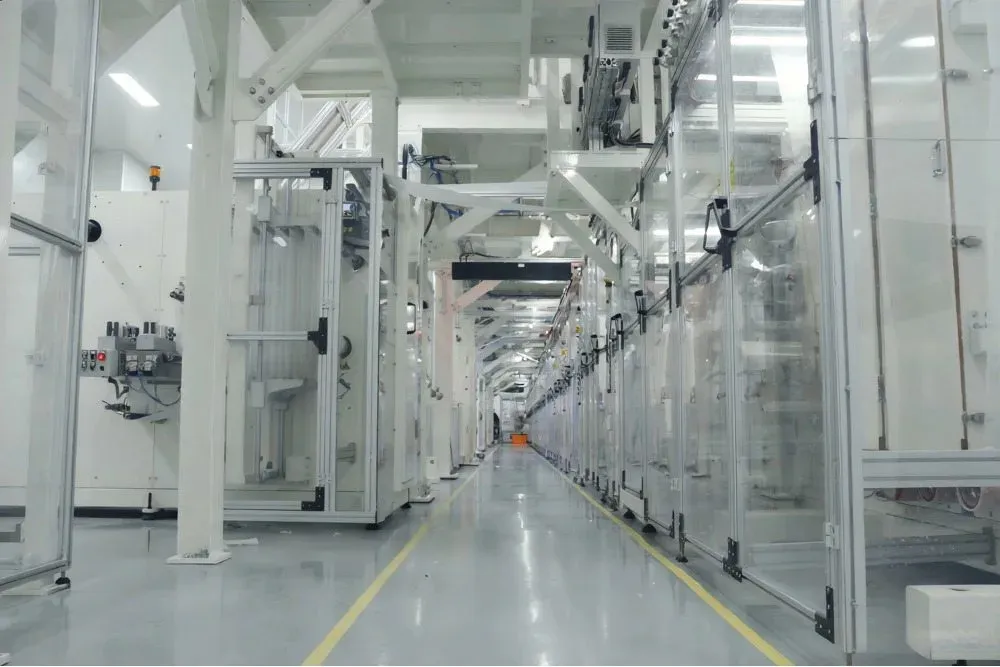
A manufacturer’s website or brochure rarely provides enough evidence to assess actual production capability. Buyers should look beyond the number of production lines and examine whether the factory can consistently support the required order volume, specifications, and customization needs.
Key areas to verify include the number and type of production lines, automation level, production scheduling, equipment condition, material handling, R&D support, and packaging capabilities.
For customized baby diapers, buyers should also confirm which product specifications can actually be adjusted, such as absorbent core configuration, material selection, sizing, waist construction, product structure, and packaging.
Easy Hygienic operates more than 35 automated production lines and supports OEM, ODM, and private label production for global brand customers.
Phase 4: Evaluate Quality Control Systems Instead of Only Product Samples
One of the most common sourcing mistakes is assuming that a good sample automatically represents stable mass production. A sample demonstrates what a manufacturer can produce under specific conditions, but it does not by itself prove long-term batch consistency.
Buyers should therefore review the manufacturer’s quality control process from incoming materials through finished products.
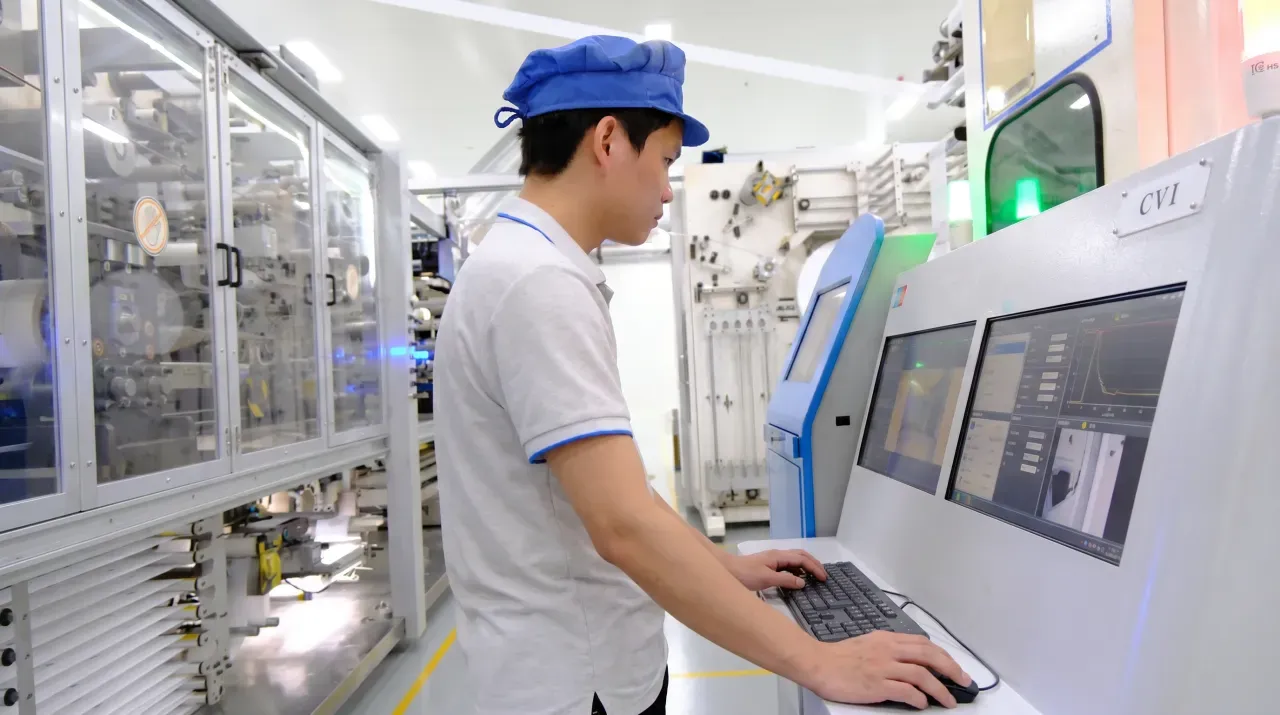
A comprehensive system may include incoming inspection of nonwoven materials, SAP, and fluff pulp; in-process checks for dimensions, weight, appearance, and production parameters; and finished-product testing covering relevant performance and safety requirements.
Buyers can also request quality inspection records, test reports, sample-to-bulk comparison procedures, and information about how non-conforming products are identified and handled.
Easy Hygienic uses a CNAS-certified laboratory environment, more than 350 quality checkpoints, and AI-assisted inspection systems as part of its quality management process.
Phase 5: Assess OEM and Private Label Manufacturing Capability
For growing baby care brands, OEM and private label capability can be just as important as basic production capacity. Buyers should determine whether a manufacturer can support the level of product and packaging customization required for the project. Explore our baby care solutions to learn more about OEM baby diaper products, customization options, and manufacturing capabilities for global brands.
Depending on the factory, customization may include absorbent core configuration, material selection, sizing, product structure, packaging formats, printed bags, cartons, and sample development.
Before placing an order, buyers should clarify which specifications can be customized, which require minimum order quantities, how samples are approved, and whether the same specifications can be maintained during bulk production.
Easy Hygienic provides OEM, ODM, and private label manufacturing solutions for baby care brands at different development stages.
Phase 6: Review MOQ, Lead Time and Supply Stability
MOQ, pricing structure, production lead time, and raw material availability can directly affect a private label baby diaper project. Buyers should evaluate these factors together rather than selecting a manufacturer solely on the basis of the lowest quotation.
Before ordering, confirm the minimum order quantity for each product specification, expected production lead time, packaging requirements, sample approval process, and the manufacturer’s ability to support repeat orders.
For detailed cost planning and project budgeting, refer to our guide on how much it costs to start a private label baby diaper brand.
Phase 7: Confirm International Export Experience
For cross-border baby diaper projects, manufacturing capability is only one part of the evaluation. Buyers should also assess whether the manufacturer has experience supporting international shipments, export documentation, logistics coordination, and market-specific requirements.
Useful information to verify includes the markets the manufacturer currently serves, experience with international documentation, packaging and labeling requirements, and the ability to coordinate repeat export orders.
Easy Hygienic works with more than 100 global clients and serves more than 100 export markets across Europe, the Americas, and Asia. This international experience supports its OEM and private label cooperation with global baby care brands.
Red Flags When Evaluating a Baby Diaper Manufacturer
During manufacturer verification, buyers should pay attention to warning signs that may indicate higher sourcing risk.
These can include:
- Significant differences between the manufacturer’s claims and the information shown in official business or certification records
- Certification documents that cannot be independently verified or whose scope does not match the product
- Unclear factory ownership or production arrangements
- Inability to provide reasonable evidence of production capability
- Incomplete quality inspection or testing documentation
- Unclear MOQ, lead-time, or repeat-order arrangements
- Major differences between approved samples and bulk production
- Reluctance to provide basic factory, product, or compliance information
A low quotation alone does not prove that a manufacturer uses inferior materials. However, unusually large price differences should prompt buyers to investigate material specifications, product construction, quality controls, packaging, and the assumptions included in each quotation.
The goal is not to find the cheapest manufacturer, but to understand exactly what is included in the proposed production arrangement before placing an order.
Quick Reference: Manufacturer Evaluation Scorecard
When sourcing baby diaper manufacturers, buyers should never judge suppliers merely based on product catalogs or unit quotations. A systematic evaluation framework is essential for accurate supplier screening and long-term cooperation judgment. This comprehensive checklist covers all critical vetting criteria, including manufacturing experience, global certification compliance, automated production capacity, full-process quality control, and professional OEM/ODM customization capabilities, enabling brand owners to objectively assess supplier reliability and long-term cooperation potential.
Evaluation Dimension | What Buyers Should Check | Easy Hygienic Reference Performance |
|---|---|---|
Manufacturing Experience | Establishment date, industry experience, export experience | Established in 2012, with 14+ years of manufacturing experience and exports to 35+ countries |
Certification & Compliance | Authenticity of ISO, FDA, CE, OEKO-TEX | Complete international certification system |
Production Capacity | Number of production lines, automation level, capacity scale | 35 automated production lines |
Quality System | Laboratory, testing process, quality traceability | CNAS laboratory, 350+ quality checkpoints |
OEM Capability | Product, packaging, and brand customization capabilities | Full-process OEM / ODM / Private Label support |
Supply Stability | Long-term supply capability | Large-scale production system support |
Phase 8: Conduct a Pre-Order Factory Verification
After reviewing the manufacturer’s background, production capabilities, quality systems, and commercial terms, buyers should complete a final verification before placing a large order.
Depending on the project, buyers may request:
- Business license and company registration information
- Factory video or live factory walkthrough
- Production line and warehouse photos
- Relevant certification and testing documents
- Quality inspection records or sample test reports
- Approved sample specifications
- Packaging artwork and labeling information
- Production lead-time confirmation
- MOQ and repeat-order terms
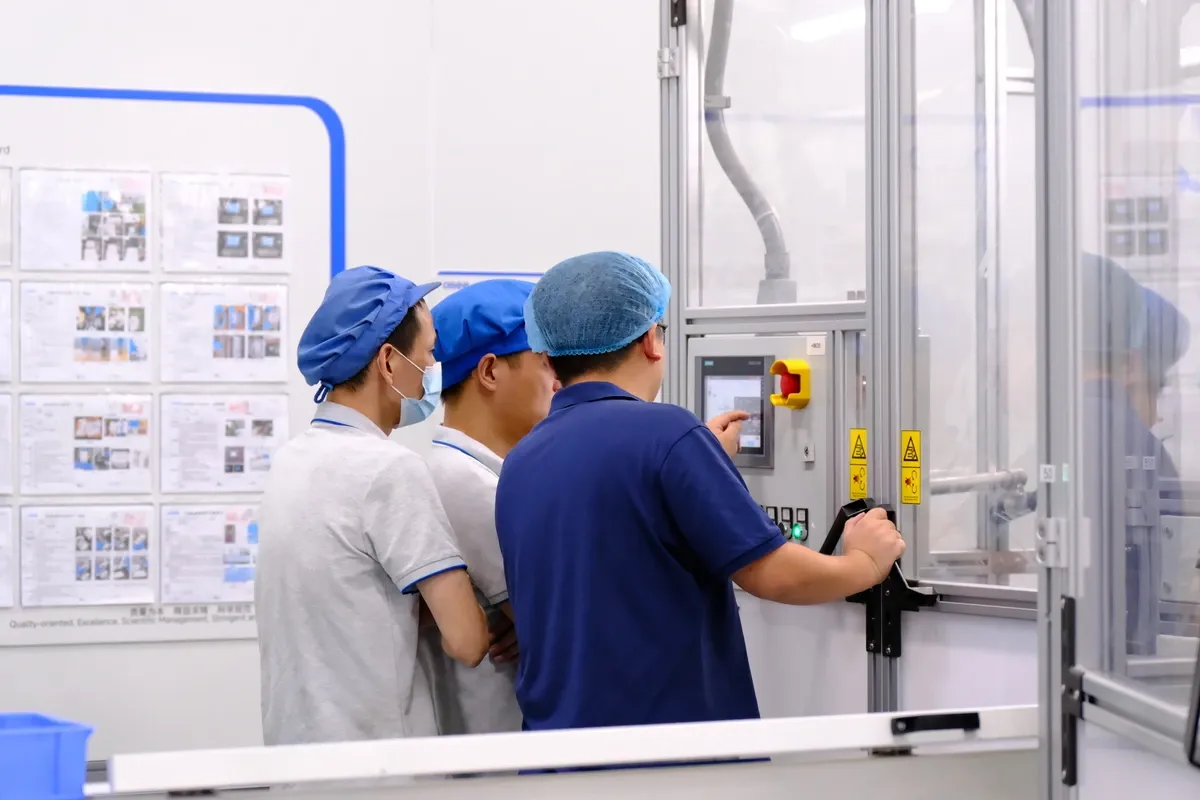
For larger or long-term projects, buyers may also consider a factory audit or live video inspection. The purpose is to confirm that the information provided during the sourcing process matches the manufacturer’s actual production and quality-management capabilities.
This final verification step can help buyers identify information gaps before committing to a large production order.
What Buyers Should Confirm Before Placing the Order
A manufacturer should be evaluated as a production partner rather than simply as a source of product samples or quotations.
Before placing a large order, buyers should have clear evidence of the manufacturer’s:
- Manufacturing background and factory capability
- Applicable certifications and compliance documentation
- Quality management and testing procedures
- OEM and private label capabilities
- MOQ, lead time, and repeat-order terms
- International export experience
- Transparency during factory verification
Taking the time to verify these areas can reduce avoidable sourcing risks and provide a clearer basis for long-term OEM cooperation.
Conclusion
Selecting a baby diaper manufacturer should involve more than comparing quotations, brochures, or product samples. Before placing a large order, buyers should verify the manufacturer’s business background, applicable certifications, production capabilities, quality management systems, OEM capabilities, supply terms, and international export experience.
A structured verification process helps buyers understand what a manufacturer can actually deliver and whether its capabilities match the requirements of the planned baby care project.
For brands looking for OEM or private label baby diaper production, careful manufacturer verification is an important step toward establishing a stable long-term production relationship.
Ready to evaluate your next baby diaper manufacturing project? Contact Easy Hygienic to discuss product specifications, OEM requirements, sampling, and production capabilities.