Introduction
For brand owners, importers, and B2B buyers sourcing OEM baby diapers, product performance depends on more than total absorbency. A disposable baby diaper is a multi-layer engineered product, with different materials working together to provide liquid acquisition, absorption, leakage protection, softness, breathability, and a secure fit.
Understanding baby diaper raw materials is therefore an important part of OEM product development. From the skin-facing topsheet and acquisition and distribution layer (ADL) to the absorbent core and outer backsheet, each material has a specific function and can influence the final product's performance, feel, appearance, and cost.
For OEM buyers, the goal is not simply to select the most expensive or highest-specification material. The better approach is to establish material specifications that match the product's intended use, target market, positioning, and performance requirements.
This guide explains the main materials and components used in baby diapers, the role of each material, and the key specifications buyers should discuss with an OEM baby diaper manufacturer before sampling and mass production.
What Materials and Components Are Used in a Baby Diaper?
A disposable baby diaper contains multiple material layers and functional components. While the exact construction varies by product design, the main materials and components typically include:
Topsheet: The skin-facing layer that allows liquid to pass into the diaper while providing a soft surface.
Acquisition and Distribution Layer (ADL): A high-loft layer that helps acquire incoming liquid and distribute it across the absorbent core.
Absorbent Core: The central absorbent structure, commonly combining fluff pulp and super absorbent polymer (SAP).
Backsheet: The outer barrier structure that helps prevent liquid leakage.
Leg Cuffs and Waist Components: Elasticized structures that help improve fit and leakage protection.
Elastic Components: Elastic materials used around the legs, waist, and other areas requiring stretch and recovery.
Fastening Systems: Hook-and-loop or adhesive fastening components used in products with adjustable closures.
Adhesives: Hot melt adhesives used to bond different layers and components during production.
Ancillary Materials: Components such as frontal tapes, release papers, packaging materials, and other production materials.
The importance of each material depends on the diaper's construction. A material should therefore be evaluated not only by its name or grade, but also by how it performs within the complete diaper structure.
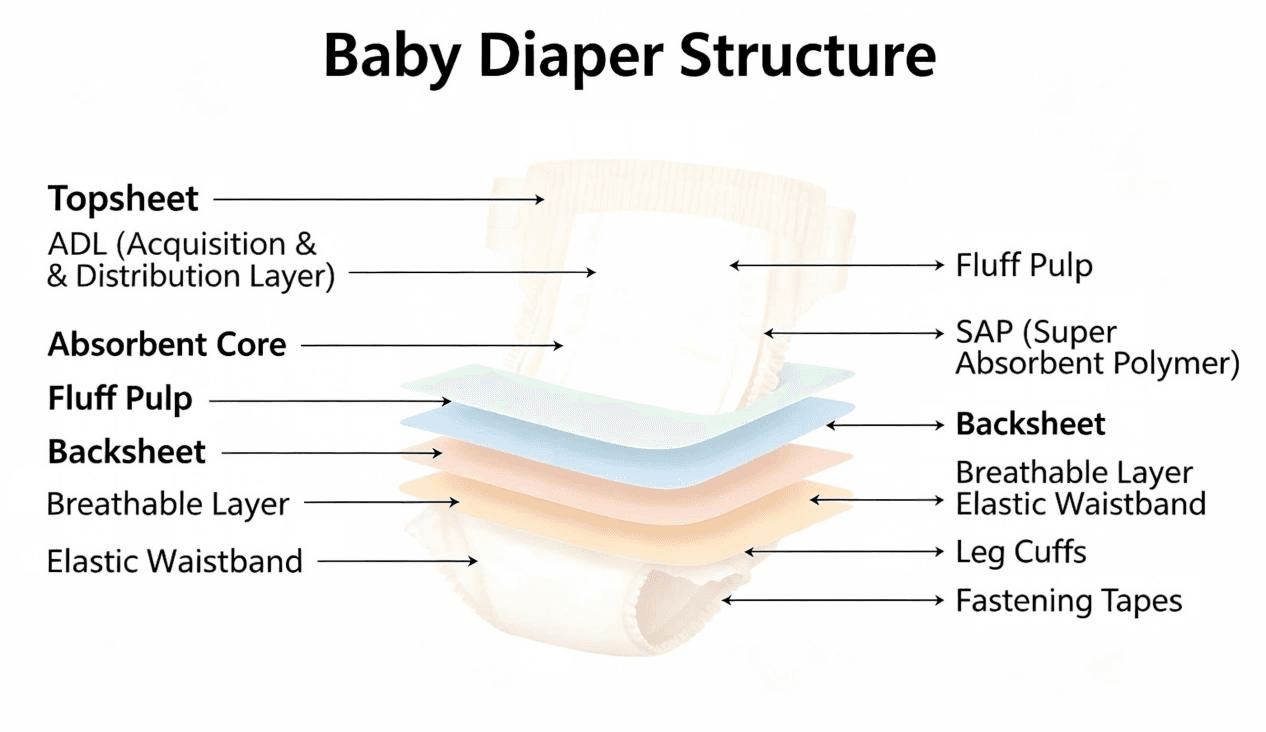
For OEM buyers, this material-level view provides a more useful starting point than relying on broad claims such as "premium materials" or "high absorbency."
SAP in Baby Diapers: What Does Super Absorbent Polymer Do?
Super absorbent polymer (SAP) is one of the key absorbent materials used in modern baby diapers. It is designed to absorb and retain large amounts of liquid within the absorbent core, helping maintain dryness and reduce leakage risk.
SAP performance is influenced by several factors rather than loading percentage alone. Important characteristics include:
- Absorption capacity
- Retention under pressure
- Absorption speed
- Rewet performance
- Particle characteristics
- SAP loading and distribution within the core
Higher SAP loading does not automatically produce a better diaper. If SAP is not properly distributed, excessive loading can contribute to core stiffness, uneven liquid distribution, or gel blocking. Gel blocking occurs when swollen SAP particles restrict liquid movement through the absorbent structure.
For this reason, OEM development should consider the relationship between SAP, fluff pulp, core structure, and liquid distribution rather than treating SAP percentage as the only indicator of absorbency.
For example, a diaper designed for overnight use may require a different absorbent structure from a lightweight daytime diaper. The objective is to achieve the required absorption and retention performance without unnecessarily increasing thickness or compromising softness.
Fluff Pulp and the Absorbent Core
Fluff pulp forms the structural matrix of many absorbent cores. It works together with SAP to support liquid acquisition, distribution, and retention.
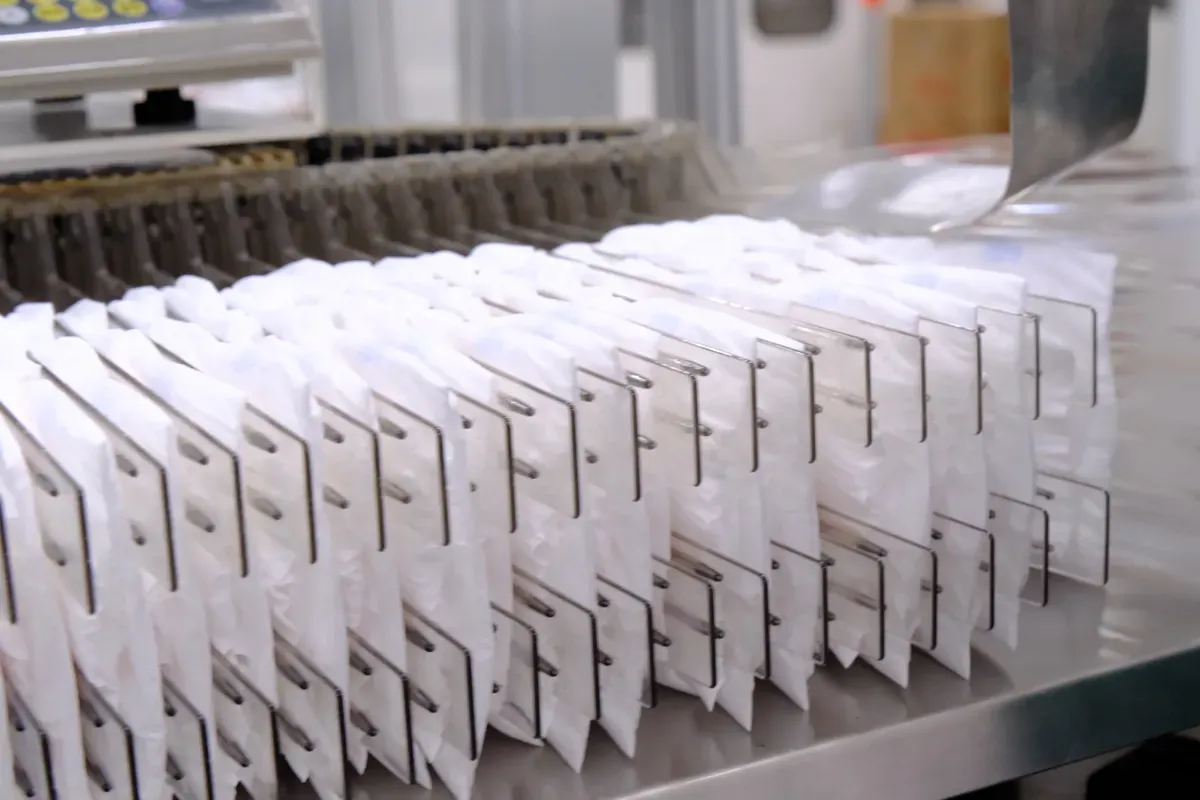
While SAP provides high liquid absorption and retention capacity, fluff pulp helps create the physical structure through which liquid can move within the core. The characteristics of the pulp and the way the core is formed can therefore influence absorption speed, liquid distribution, core stability, and overall product thickness.
For OEM buyers, relevant considerations include:
- Pulp grade and purity
- Fiber characteristics
- Basis weight
- SAP-to-pulp ratio
- Core density
- SAP distribution
- Core forming technology
- Structural integrity under compression and movement
Different absorbent core constructions can offer different combinations of thinness, softness, absorption capacity, and structural stability. Traditional pulp-rich cores and thinner composite structures should therefore be evaluated according to the intended product application rather than treated as universally better or worse.
When comparing samples, buyers should look beyond total absorbency and consider how quickly liquid is acquired, how evenly it is distributed, how much rewet occurs, and how the core behaves after compression.
Topsheet and Nonwoven Materials
The topsheet is the skin-facing layer of a baby diaper. It plays an important role in surface softness, liquid acquisition, permeability, and the user's overall comfort experience.
Most baby diaper topsheets use nonwoven materials because their fiber structure can be engineered for specific combinations of softness, strength, permeability, and surface properties.
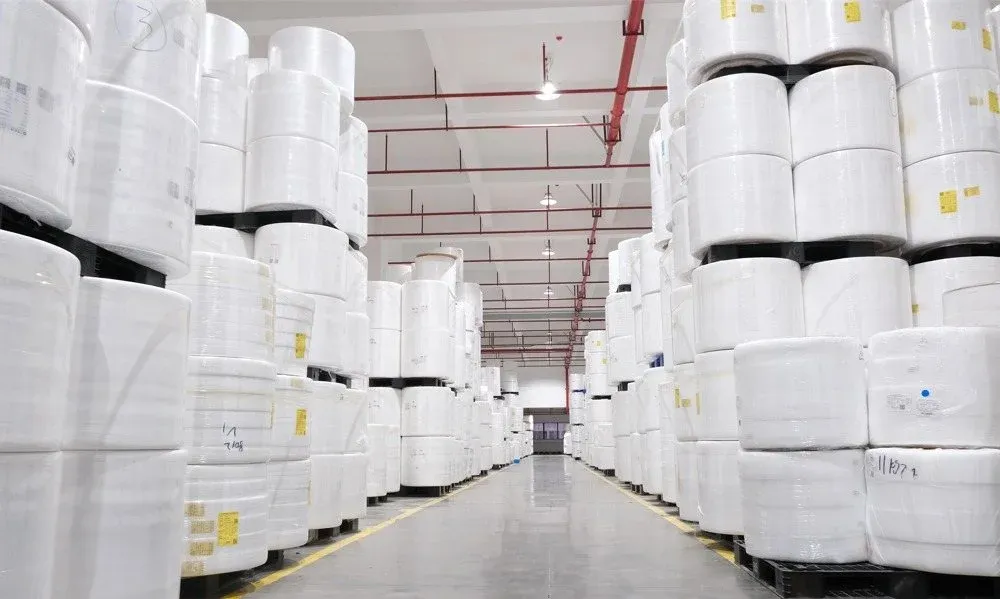
When evaluating baby diaper nonwoven materials, OEM buyers should consider:
Softness
Surface smoothness and hand feel have a direct influence on perceived product quality. Fiber type, structure, basis weight, embossing, and finishing can all affect softness.
Liquid Permeability
The topsheet needs to allow liquid to pass into the underlying layers efficiently. Strike-through speed and liquid distribution should therefore be evaluated alongside surface softness.
Surface Treatment
Hydrophilic treatment can improve liquid permeability and support faster liquid entry. Surface structure can also influence friction, wetness perception, and liquid movement.
Fiber Structure
Common nonwoven structures include spunbond materials and other engineered nonwoven constructions. More advanced structures may use bicomponent fibers, 3D structures, embossing, or other treatments depending on the product design.
For premium positioning, buyers may prioritize softer surface structures and enhanced material finishes. For value-focused products, the priority may be achieving an appropriate balance between softness, permeability, strength, and material efficiency.
The best topsheet is therefore not necessarily the softest or most expensive option. It should be selected according to the complete diaper construction and intended market.
ADL: How the Acquisition and Distribution Layer Works
The Acquisition and Distribution Layer (ADL) is positioned between the topsheet and absorbent core. Its primary role is to receive incoming liquid, distribute it over a wider area of the absorbent core, and facilitate transfer into the absorbent structure.
An appropriately designed ADL can help reduce localized pooling and improve the efficiency of the absorbent core.
Important ADL characteristics include:
- Basis weight
- Loft height
- Fiber structure
- Fiber crimp
- Liquid acquisition performance
- Liquid distribution performance
- Compression behavior
A higher-loft ADL may provide greater space for temporary liquid acquisition and distribution, while a thinner structure may be preferred in ultra-thin diaper designs. However, increasing loft or thickness does not automatically improve the final product.
ADL performance needs to be evaluated together with the topsheet and absorbent core. A high-performance core can still show poor overall liquid handling if the topsheet or ADL does not support sufficient acquisition and distribution.
For OEM buyers, it is therefore useful to specify performance requirements for the ADL rather than selecting it solely by material name or basis weight.
Backsheet and Breathable Film
The backsheet is the outer barrier structure of a baby diaper. Its primary function is to help prevent liquid from passing through the diaper while contributing to product softness, appearance, and breathability depending on the construction.
Common backsheet approaches include:
PE Film-Based Barrier Structures
Polyethylene-based films provide reliable liquid barrier performance and can be used in different diaper constructions. They may be selected for products where barrier performance and material efficiency are key considerations.
Breathable Microporous Film
Microporous breathable films are designed to allow water vapor to pass through while maintaining liquid barrier performance. They are commonly used when breathability is an important part of the product specification.
Film and Nonwoven Composite Structures
Some diaper designs combine film with a nonwoven outer layer to improve softness, appearance, and textile-like feel while maintaining the required barrier function.
For OEM buyers, backsheet evaluation should include:
- Liquid barrier performance
- Breathability
- Thickness
- Softness
- Surface appearance
- Printability
- Bonding compatibility
- Structural stability
Custom printed backsheets can also support private label brand differentiation, particularly when the outer surface is visible during use or packaging presentation.
The appropriate backsheet depends on the product's target positioning and performance requirements rather than a simple "standard versus premium" classification.
Elastic Components, Tapes and Adhesives
Although they account for less visible surface area than the topsheet or absorbent core, elastic components, fastening systems, and adhesives can have a significant effect on fit, comfort, leakage protection, and manufacturing stability.
Elastic Components
Leg and waist elastics help create a secure fit around the baby's body. Important considerations include:
- Stretch ratio
- Recovery
- Elastic force
- Covering softness
- Placement and tension
Poorly controlled elastic performance can affect both leakage protection and wearer comfort.
Fastening Systems
For diaper designs using adjustable closures, fastening systems need to provide secure attachment while maintaining appropriate peel strength and, where required, repositionability.
Hot Melt Adhesives
Hot melt adhesives bond different diaper layers and components during production. Their formulation can influence bond strength, processing conditions, production stability, and finished-product integrity.
Because these materials are integrated into the manufacturing process, OEM buyers should evaluate them as part of the overall diaper construction rather than as isolated secondary materials.
How Should OEM Buyers Specify Baby Diaper Raw Materials?
One common problem in OEM baby diaper sourcing is using vague material descriptions.
Terms such as: "premium material", "super soft topsheet", "high-quality SAP" do not provide enough information for consistent product development.
Instead, OEM buyers should define measurable material and performance requirements.
1. Specify the Material Type
Use specific descriptions where possible, such as:
Hydrophilic spunbond nonwoven
rather than:
Soft topsheet
2. Define Basis Weight
Basis weight, normally expressed in grams per square meter (gsm), can be specified for relevant nonwoven, core, and other material structures.
3. Establish Performance Requirements
Depending on the component, requirements may include:
- Absorption
- Retention
- Rewet
- Strike-through
- Liquid distribution
- Leakage resistance
- Softness
- Stretch and recovery
- Bond strength
4. Define Testing and Acceptance Criteria
Buyers should agree on applicable testing methods, sample conditions, acceptance criteria, and product specifications before mass production.
5. Identify Approved Alternatives
For long-term OEM production, pre-approved alternative materials can help reduce supply chain disruption without allowing uncontrolled material substitutions.
6. Consider Target-Market Requirements
Material selection should also account for applicable safety, labeling, and compliance requirements in the intended market.
Clear specifications reduce misunderstandings between buyers and manufacturers, shorten sample revision cycles, and improve consistency during mass production.
How Material Selection Affects Baby Diaper Performance
Baby diaper performance is the result of material synergy rather than any single component.
For example, a high-absorbency core may not perform as expected if liquid cannot quickly pass through the topsheet. Similarly, a highly breathable backsheet does not compensate for insufficient core capacity or poor leakage control.
Material combinations can influence several important performance areas:
- Softness
- Liquid acquisition
- Absorption
- Rewet
- Leakage protection
- Breathability
- Fit
- Product thickness
- Structural stability
There is therefore no universal "best" combination of baby diaper materials. The appropriate construction depends on the product's intended use, target market, price positioning, and performance requirements.
How to Balance Materials for Different Baby Diaper Product Positions
Material selection often changes according to the product's intended positioning.
Daytime Diapers
Daytime products may prioritize:
- Lightweight construction
- Softness
- Fast liquid acquisition
- Adequate absorbency
- Comfortable fit
The objective is often to balance sufficient performance with a relatively thin and comfortable structure.
Overnight Diapers
Overnight products may place greater emphasis on:
- Absorption capacity
- Liquid retention
- Rewet control
- Leakage protection
- Core stability
The absorbent core, ADL, and backsheet need to work together to support longer wearing periods.
Premium Baby Diapers
Premium products may place greater emphasis on:
- Soft skin-contact materials
- Advanced nonwoven structures
- Breathable construction
- Refined fit
- Surface appearance
- Overall comfort
Material selection should still be based on measurable performance rather than premium labeling alone.
Value-Focused Baby Diapers
Value-focused products typically require careful optimization of:
- Material efficiency
- Core performance
- Topsheet permeability
- Leakage protection
- Manufacturing consistency
The objective is to achieve the required performance without adding unnecessary material costs.
How Easy Hygienic Evaluates Materials for OEM Production
For an OEM baby diaper project, material selection should be followed by structured validation before mass production.
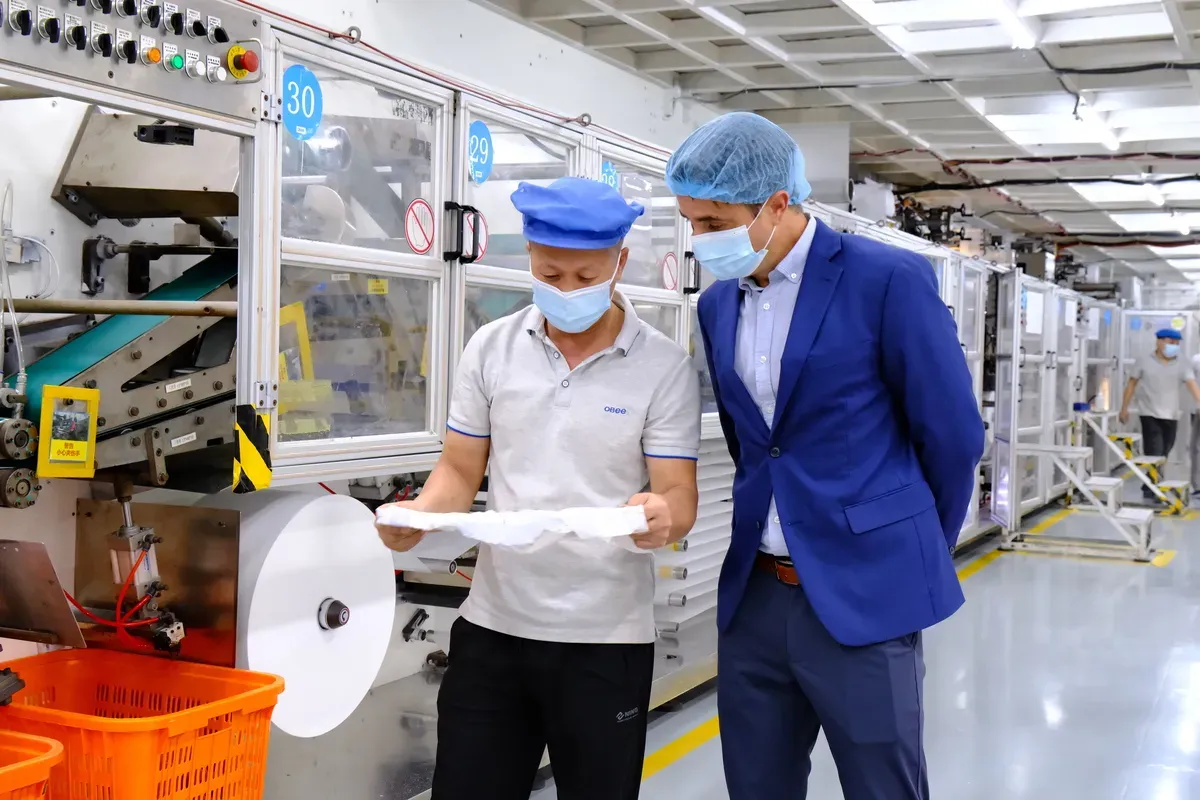
Easy Hygienic's material approval process can be organized into several stages:
1. Specification Matching
Material options are evaluated against the client's product brief, target positioning, intended use, and market requirements.
2. Laboratory Validation
Relevant product characteristics can be evaluated through testing of factors such as absorption, rewet, softness, leakage-related performance, and material safety requirements.
3. Incoming Quality Control
Approved materials are checked during incoming inspection to help maintain consistency between material specifications and production batches.
4. Sample Confirmation
The final material combination is confirmed during product sampling. Once specifications are approved, subsequent production should follow the agreed material and product requirements.
5. Change Control
Material substitutions should not be treated as routine changes. Any significant change in material type or specification should be evaluated to determine whether additional testing and client approval are required.
This process helps reduce specification drift between the approved sample and mass production.
Questions to Ask Your Baby Diaper Manufacturer About Raw Materials
Before placing an OEM order, buyers can use the following questions to evaluate a manufacturer's material expertise and quality-control process:
- What standard materials are used in your base diaper designs?
- Which materials can be customized according to our product requirements?
- What specifications are available for the topsheet, ADL, absorbent core, SAP, pulp, and backsheet?
- How do you evaluate material performance and batch consistency?
- What testing methods are used for absorption, rewet, leakage, and other key performance indicators?
- Can you provide approved alternative materials for supply continuity?
- How are material substitutions controlled during mass production?
- How do you ensure that mass production matches the approved sample?
For additional supplier evaluation questions, see our guide to 7 Questions to Ask Before Choosing a Baby Diaper Manufacturer.
FAQ
What materials are used in baby diapers?
Disposable baby diapers typically contain a nonwoven topsheet, acquisition and distribution layer (ADL), absorbent core containing materials such as fluff pulp and SAP, backsheet, elastic components, fastening systems, adhesives, and other ancillary materials.
What does SAP do in baby diapers?
Super absorbent polymer (SAP) absorbs and retains large amounts of liquid within the absorbent core. Its performance depends on characteristics such as absorption capacity, retention, particle properties, loading, and distribution within the core.
What is the difference between fluff pulp and SAP?
Fluff pulp helps form the absorbent core structure and supports liquid distribution, while SAP provides high liquid absorption and retention capacity. The two materials are commonly used together to achieve balanced absorbent performance.
What is ADL in baby diapers?
ADL stands for Acquisition and Distribution Layer. It is positioned between the topsheet and absorbent core and helps acquire incoming liquid and distribute it across a wider area of the absorbent structure.
What is the purpose of the backsheet in a baby diaper?
The backsheet forms the outer barrier structure of the diaper and helps prevent liquid leakage. Depending on its construction, it can also contribute to breathability, softness, appearance, and overall product feel.
What should OEM buyers specify when sourcing baby diaper materials?
OEM buyers should define the material type, basis weight, functional performance requirements, testing methods, acceptance criteria, applicable market requirements, and approved alternatives wherever appropriate.
Conclusion
Baby diaper raw materials form an integrated system in which each layer contributes to the final product's performance. SAP and fluff pulp determine much of the absorbent core's behavior, while the topsheet and ADL influence liquid acquisition and distribution. The backsheet supports leakage protection and, depending on its structure, breathability and softness. Elastic components, fastening systems, and adhesives contribute to fit, comfort, and structural integrity.
For OEM and private label buyers, successful product development therefore requires more than selecting individual materials. Buyers need to define measurable specifications, evaluate how materials work together, and align the final construction with the intended use, target market, and product positioning.
Easy Hygienic supports OEM baby diaper development through material selection, product testing, quality control, and customized product specifications for different market requirements. Explore the Baby Care product range to learn more about OEM capabilities, or contact our team to discuss your product requirements and material specifications.