Many new private label baby care brands believe that sourcing a qualified baby diaper manufacturer completes their supplier selection process. In reality, choosing a reliable factory is only the starting point of long-term OEM cooperation. The entire workflow from initial inquiry, RFQ communication, and sample development to mass production and final delivery requires standardized, precise operations. These standardized procedures directly determine product quality stability, overall procurement costs, and on-time delivery performance for private label baby diaper projects.
Brands that lack mature cooperation standards often encounter common sourcing issues, including inaccurate quotations, repeated sample revisions, delayed shipments, and inconsistent quality between approved samples and bulk goods. These problems lead to extra costs, schedule delays, and damaged brand credibility in global markets. This guide explains the typical workflow for working with an OEM baby diaper manufacturer, from RFQ preparation and sample development to trial orders, quality control, shipping, and long-term production planning. It equips cross-border buyers with standardized operating steps to streamline the entire cooperation process, shorten brand launch cycles, and build stable long-term supply chain partnerships.
Step 1: Prepare a Detailed RFQ Before Contacting a Baby Diaper Manufacturer
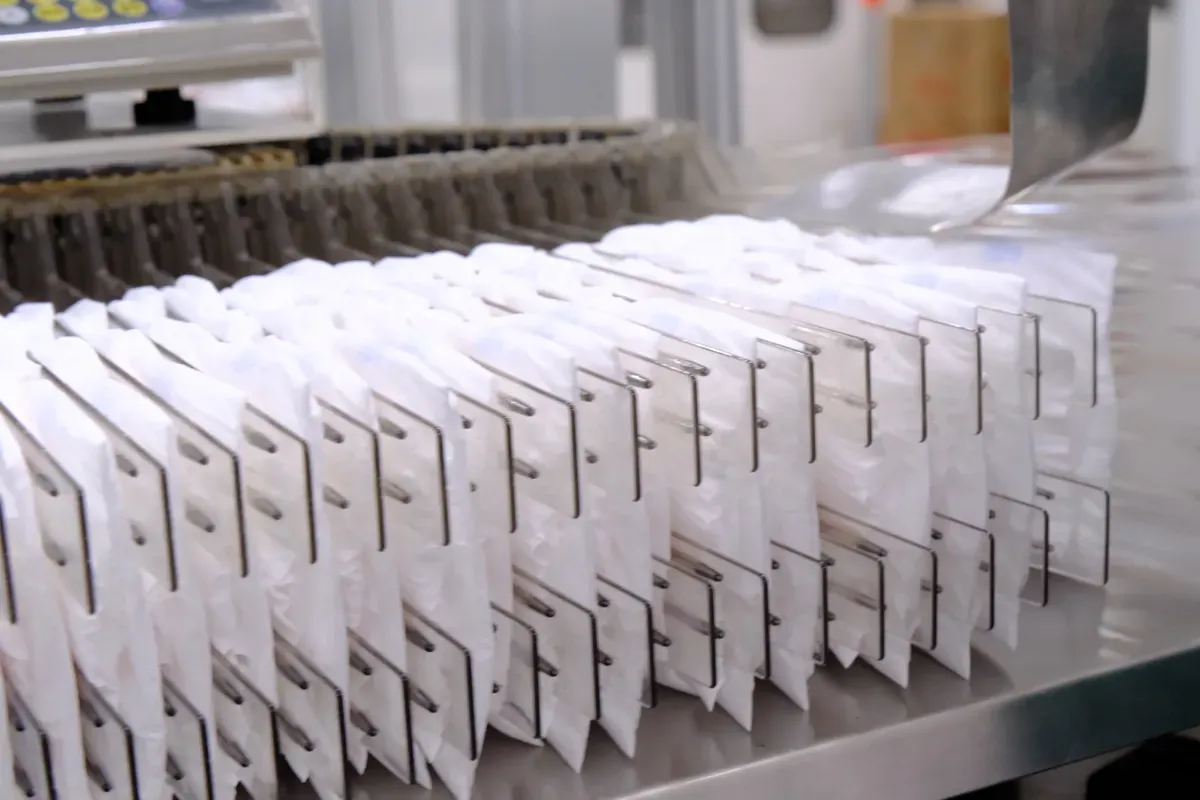
A precise and comprehensive RFQ (Request for Quotation) is the foundation of efficient and error-free cooperation with any OEM baby diaper manufacturer. Most inaccurate quotes, delayed responses, and later-stage specification disputes stem from incomplete and vague RFQ information. When buyers fail to provide clear technical and packaging requirements, manufacturers can only offer estimated prices based on general industry standards, which inevitably causes price deviations, uncertain lead times, and costly repeated modifications during formal production.
A well-structured, detailed RFQ eliminates redundant back-and-forth communication, unifies product definition standards between buyers and factories, and ensures accurate, customized quotations. As a professional baby diaper manufacturer serving global private label brands, Easy Hygienic provides standardized RFQ guidance for all cooperative clients. Our team helps buyers sort out complete product requirements, match targeted raw material configurations, and deliver precise OEM solutions that fully adapt to different regional market compliance rules.
To reduce quotation differences and avoid specification misunderstandings, every RFQ for private label baby diapers should include the following technical parameters:
• Product Specifications: Clear size range (NB/S/M/L/XL), single-piece weight standards, and target absorption volume (ml) to meet regional consumer demands.
• Material Preferences: Custom requirements for top sheet texture and material, absorbent core configuration, and back sheet type (PE film or breathable film).
• Core Structure Standards: Definition of full-core or hybrid core structure and customized absorption speed requirements adapted to different climate and market needs.
• Structural Design: Confirmation of waistband type (standard waist or 360° elastic waist) and professional height standards for leak-proof side cuffs to prevent side leakage.
• Packaging Requirements: Fixed quantity per pack, packaging material selection (PE packaging or degradable eco-friendly packaging), printing color counts, and standard outer carton dimensions.
• Target Market: Clear definition of sales regions including the USA, EU, Middle East, and Southeast Asia, to match corresponding certification and product compliance standards.
• Estimated Annual Order Volume: Help manufacturers evaluate capacity allocation, arrange production schedules, and provide tiered preferential pricing for long-term stable orders.
Step 2: Sample Development and Product Approval Process
Sample development is an indispensable core stage between RFQ confirmation and formal mass production for private label baby diapers. It allows buyers to verify whether a baby diaper manufacturer can fully realize customized product design, performance standards, and comfort requirements. For projects involving proprietary product specifications, packaging designs, or other confidential information, buyers may choose to put an NDA in place before detailed sample development begins.
A standard Non-Disclosure Agreement (NDA) covers all confidential cooperative information, including exclusive product specifications, customized raw material formulas, private label packaging designs, and negotiated pricing terms. OEM manufacturers may provide standard NDA templates that buyers can review and adjust according to their project requirements. An NDA helps define how confidential information, proprietary specifications, packaging designs, and other project materials should be handled during the cooperation.
Formal sample development at qualified baby diaper factories follows a standardized three-stage process to ensure final products fully match buyer expectations and market standards:
Concept Sample: The initial prototype focuses on verifying the feasibility of the product structure and overall design. At this stage, the main objective is to confirm the product concept and identify areas that may require further optimization.
Development Sample: Based on feedback from the initial sample, the manufacturer refines the product structure, materials, appearance, and performance requirements. Depending on the project, this stage may include testing of absorption performance, comfort, leakage protection, and appearance.
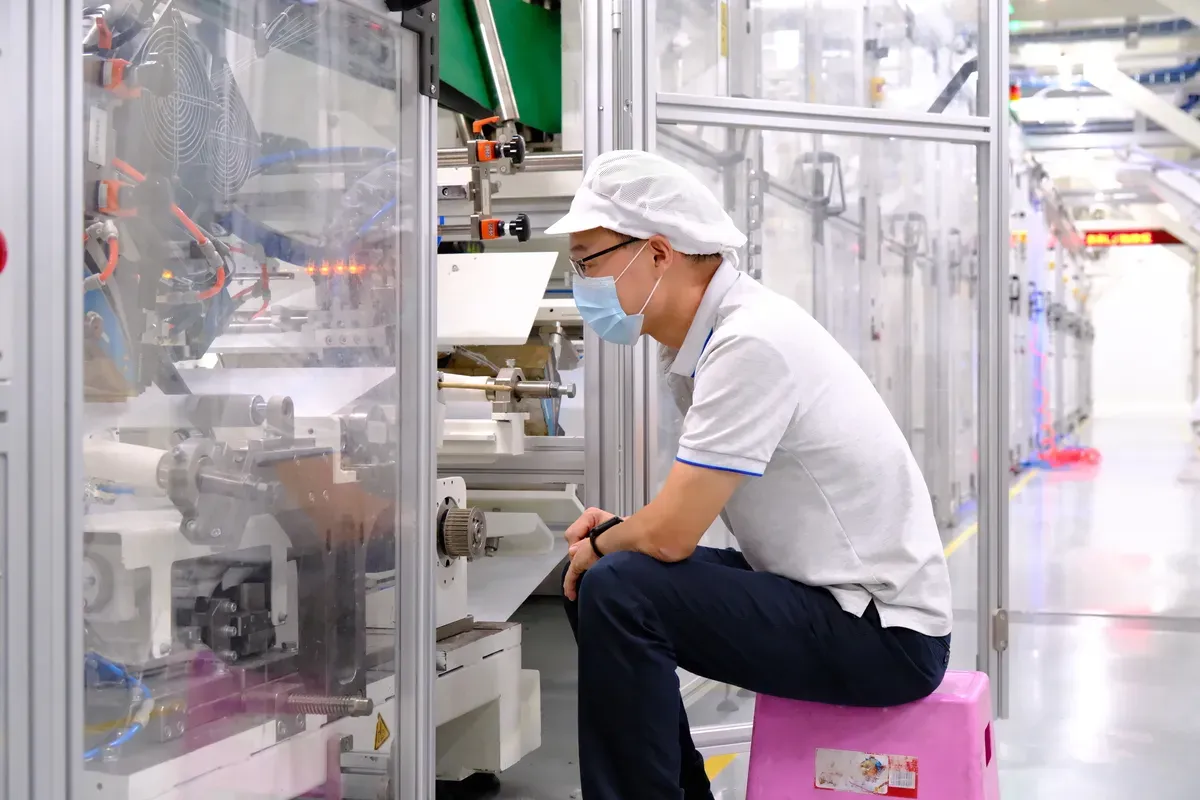
The actual sample development timeline varies depending on product complexity, material availability, packaging requirements, and the number of revision rounds. Buyers should confirm the expected timeline with the manufacturer at the beginning of the project.
In terms of sample cooperation policies, sample production fees and international express delivery fees are generally borne by buyers. Most reputable manufacturers offer a flexible sample fee deduction policy, where sample costs can be fully offset once subsequent formal orders reach a specified amount. To effectively verify a factory’s quality stability and process standardization, buyers are strongly recommended to request two rounds of sample verification with a 2–4 week interval to inspect batch-to-batch quality consistency.
Step 3: Confirm Product Specifications and Production Agreement
All approved pre-production samples must be designated as the unified, official quality reference standard for mass production. Before placing formal bulk orders, buyers and their selected OEM baby diaper manufacturer must sign a detailed and binding production agreement to lock in all product specifications, eliminating arbitrary modifications and quality deviations during production.
The formal confirmation covers six core standardized modules: fixed product size parameters, finalized raw material configurations, clear absorption performance qualification standards, confirmed private label packaging solutions, unified labeling and marking rules, and standardized quality inspection benchmarks. Both parties must clearly define appearance acceptance standards, performance qualification thresholds, and official inspection methods in written form to avoid subjective judgment differences.
A standardized change management clause is essential in formal cooperation agreements. Any adjustments to raw materials, product structure, packaging design, or performance parameters after official confirmation require written double confirmation from both parties. This standardized mechanism effectively prevents production errors, quality deviations, and cost disputes caused by temporary modifications, ensuring the entire production process of private label baby diapers is standardized, transparent, and controllable.
Step 4: Start with Trial Orders Before Scaling Production
For newly established private label brands and first-time cooperation with a new baby diaper manufacturer, placing large-scale bulk orders without prior verification is a major supply chain risk. Unverified products may have unstable quality, mismatched consumer preferences, and uncertain market feedback, easily causing inventory backlogs, capital pressure, and brand market losses.
A phased ordering strategy can help cross-border baby care brands reduce initial inventory exposure while verifying product quality, delivery performance, and market response. The standardized growth path follows small-batch trial verification → real market feedback collection → gradual capacity expansion. Small trial orders allow buyers to fully verify a factory’s production stability, product market adaptability, delivery punctuality, and after-sales service quality with minimal risk.
A reasonable baby diaper MOQ can help balance startup inventory requirements with the need for market testing. New brands can complete product iteration, quality optimization, and market validation through small trial orders before launching large-scale bulk shipments, greatly reducing entrepreneurial and operational risks. For comprehensive budget planning and cost analysis, refer to our professional in-depth guide: How Much Does It Cost to Start a Private Label Baby Diaper Brand, which systematically breaks down private label baby diapers cost composition and profit improvement strategies.
Step 5: Understand Packaging, Shipping and Delivery Planning
Packaging design and logistics planning are key links in the full-cycle cooperation with a professional baby diaper manufacturer in China, directly affecting brand image display, container utilization, logistics costs, and delivery timeliness. All packaging details must be fully confirmed and finalized before mass production to avoid production rework, packaging errors, and delivery delays.
Core packaging confirmation items include fixed diaper quantity per pack, customized bag design and market-compliant label information, standardized outer carton size and packing quantity, and barcode specifications that comply with target market regulatory requirements. Scientific and standardized packaging design maximizes container loading rates, reduces single-piece logistics costs, and significantly enhances brand professionalism and competitiveness in overseas markets.
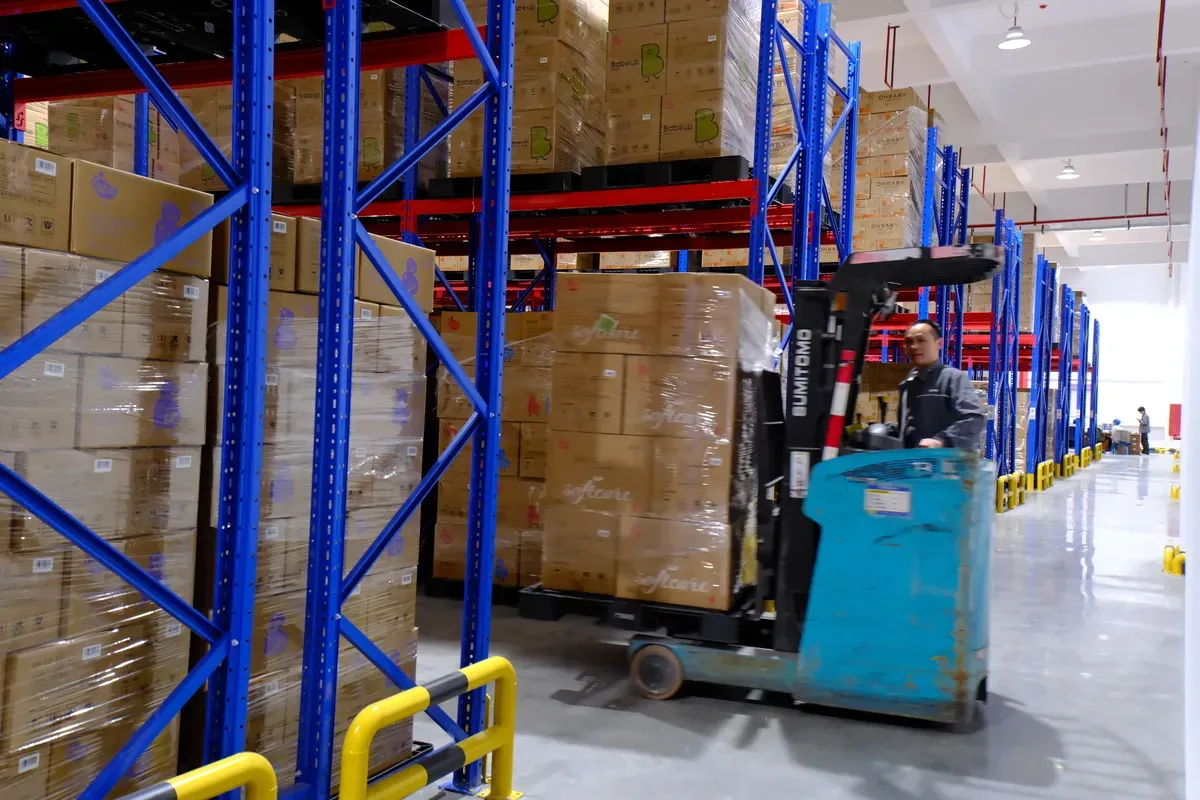
Buyers should select the appropriate Incoterm based on their import experience, destination-country requirements, logistics capabilities, and responsibility for customs clearance and taxes. FOB can give experienced buyers greater control over international freight arrangements. CIF places the main carriage arrangement with the seller, while the buyer remains responsible for import clearance and applicable duties. DDP can simplify the buyer's logistics responsibilities, but its feasibility depends on the destination market, tax rules, and the seller's ability to handle import formalities.
Before official shipment, buyers must confirm accurate production lead time, detailed shipping schedule, and expected delivery date with the manufacturer. Meanwhile, verify the complete set of formal export documents, including Commercial Invoice, Packing List, Bill of Lading, and Certificate of Origin. A trustworthy baby diaper manufacturer not only guarantees stable product quality but also provides standardized production scheduling and professional full-process export support.
Step 6: Maintain Quality Control During Mass Production
Successful sample approval cannot represent consistent mass production quality. Continuous, full-process quality control during bulk manufacturing is the core guarantee of long-term stable cooperation with a reliable baby diaper factory. Professional OEM factories implement a dual quality assurance system combining in-process inspection and pre-shipment inspection to eliminate batch quality deviations.
Depending on the product specification and agreed QC plan, in-process inspections may monitor parameters such as superabsorbent polymer (SAP) usage, product weight, dimensions, and relevant absorption-performance indicators. Manufacturers may also provide batch inspection records to help buyers track production consistency. Advanced modern factories are equipped with intelligent AI visual inspection systems, which automatically identify and eliminate defective products on the production line, minimizing manual inspection errors and ensuring stable batch quality.
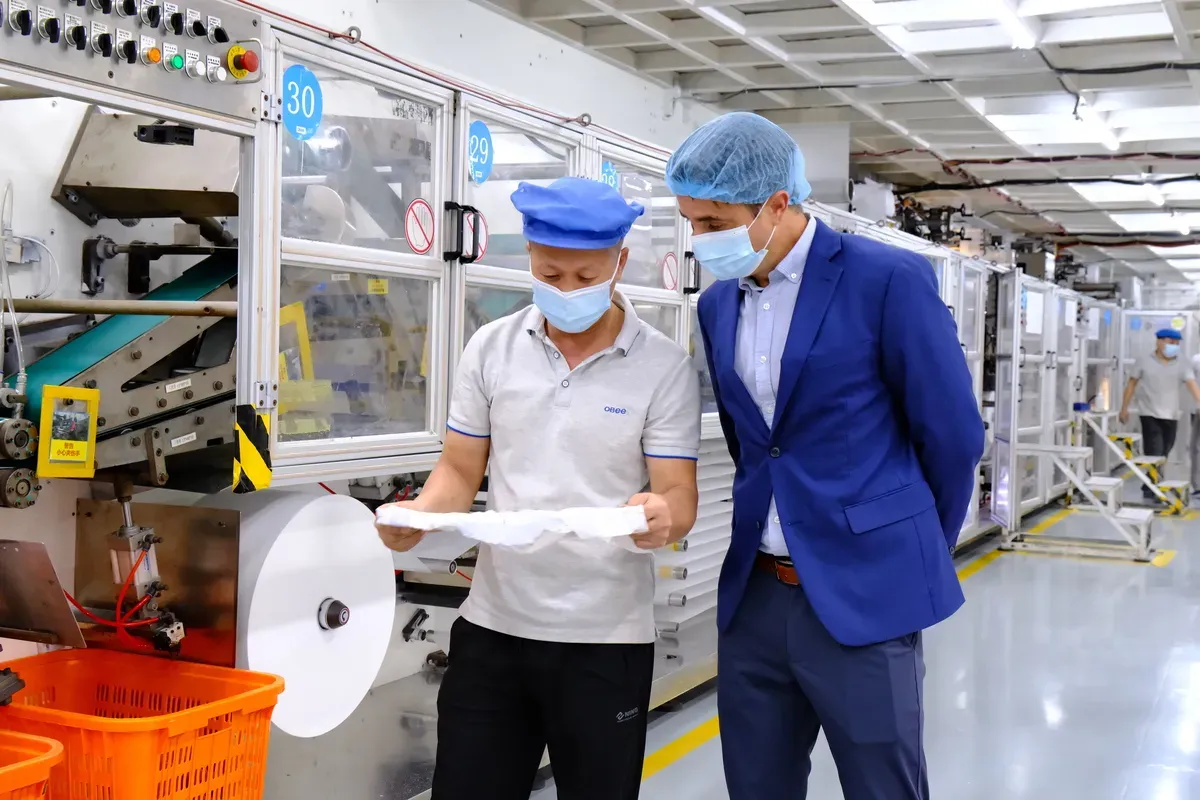
For additional assurance before shipment, buyers may appoint independent third-party inspection companies such as SGS, Intertek, or Bureau Veritas, depending on their project requirements. Inspection scopes can include product quantity, packaging integrity, appearance defects, dimensional accuracy, and selected product-performance tests. Where applicable, the inspection can use an agreed sampling plan such as ANSI/ASQ Z1.4, with the specific acceptance criteria defined in the purchase agreement.
The formal cooperation agreement must clearly define the complete handling mechanism for non-conforming products, including standardized return, replacement, and compensation processes. Setting up a reasonable quality deposit mechanism fully protects buyers’ legitimate procurement rights and interests. For systematic professional knowledge of diaper manufacturing and quality management, refer to our pillar article: Inside a Baby Diaper Factory: Raw Materials, Manufacturing Process and Quality Control.
Step 7: Build a Long-Term Partnership with Your Manufacturer
After verifying stable product quality, standardized processes, and reliable delivery performance, brands can establish long-term strategic cooperative relationships with excellent private label baby diaper manufacturer partners to achieve continuous cost optimization and priority production capacity. A formal long-term cooperation agreement includes four core modules: annual procurement volume commitment, flexible price adjustment mechanisms adapting to raw material price fluctuations, peak season capacity reservation guarantees, and long-term quality stability monitoring systems.
Long-term strategic partnerships create irreplaceable value for growing global baby care brands. In terms of cost control, manufacturers provide more favorable tiered pricing and exclusive cost optimization solutions for stable long-term orders. In terms of production capacity, long-term cooperative clients enjoy peak season priority scheduling to avoid stock shortages during sales booms. In terms of product innovation, factories allocate priority R&D resources for exclusive product iteration and customized private label development.
With 14+ years of professional OEM/ODM manufacturing experience and mature intelligent production systems, Easy Hygienic focuses on long-term strategic cooperation with global baby care brands. We provide exclusive peak season capacity reservation, priority R&D support, and flexible price adjustment policies for long-term partners, helping brands achieve stable and sustainable market growth. For professional supplier selection standards, refer to our core guide: How to Choose a Baby Diaper Manufacturer: 7 Key Questions.
Common Mistakes When Starting Cooperation with a Baby Diaper Manufacturer
Most supply chain risks and cooperation disputes stem from avoidable operational errors in the early cooperation stage. Summarizing and avoiding these common mistakes helps global buyers standardize procurement processes and maximize cooperation efficiency:
Mistake 1: Only comparing prices.
Comparing manufacturers based on price alone can hide important differences in materials, product specifications, quality-control requirements, packaging, logistics terms, and after-sales responsibilities. Buyers should evaluate the full commercial and technical scope behind each quotation rather than comparing unit prices alone.
Mistake 2: Vague product specifications.
Unclear material standards and performance parameters directly cause inconsistent batch quality and repeated sample revisions.
Mistake 3: Skipping formal sample approval.
Launching mass production without confirming pre-production samples easily leads to large-area quality deviation and economic losses.
Mistake 4: Scaling up production too early.
Blind bulk orders without market verification cause serious inventory backlogs and wasted capital resources.
Mistake 5: Ignoring standardized process communication.
Lack of unified docking mechanisms leads to delayed information transmission and disordered production schedules.
FAQ
Q1: What should I include in an RFQ for baby diapers?
A complete and effective baby diaper RFQ includes product size specifications, weight and absorption parameters, raw material and structural requirements, packaging standards, target market certification demands, and estimated annual order volume. Detailed parameter descriptions ensure accurate OEM quotations and eliminate later-stage specification disputes.
Q2: How long does sample development take, and how many rounds are typical?
Sample development timelines vary depending on product complexity, material availability, packaging requirements, and the number of revision rounds. Buyers should confirm the expected timeline with the manufacturer at the beginning of the project.
Q3: Can I start with a small trial order and scale up later?
Yes. Reliable OEM baby diaper manufacturer teams support flexible phased ordering. Small trial orders can help new brands verify product quality, delivery performance, and market response before expanding production volumes.
Q4: What's the difference between FOB and DDP, and which should I choose?
FOB is suitable for professional long-term buyers with independent import capabilities for transparent cost control. DDP can simplify some import and logistics responsibilities for buyers, but its feasibility depends on the destination market, applicable tax rules, and the seller's ability to handle import formalities.
Conclusion & CTA
Selecting a suitable baby diaper manufacturer is only the first part of a successful OEM project. A clearly defined cooperation process—from RFQ preparation and sample approval to trial orders, production QC, and final delivery—can help reduce avoidable quality, cost, and scheduling risks during a private label launch. A structured cooperation process can help global baby care brands reduce avoidable quality issues, unnecessary costs, and delivery delays while creating a more reliable foundation for long-term OEM cooperation.
Easy Hygienic provides one-stop standardized private label OEM cooperation solutions for global clients. We offer professional RFQ templates, efficient sample development services, flexible phased trial order plans, and stable long-term supply agreements to empower continuous brand growth.
Ready to launch your customized private label baby diapers line? Contact Us today to discuss your product specifications, sample requirements, MOQ, packaging, and OEM production plan with our team.