Private label brands entering adult incontinence care, or extending an existing range, face several decisions at once: which categories to launch, how many absorbency levels to carry, which sizes to stock first, and which channels to serve. Answering these one by one produces a collection of SKUs rather than a product line.
A well-planned adult incontinence product portfolio is more than a collection of individual SKUs. Each product should serve a defined user group and use case, while the overall range covers different needs without unnecessary overlap. This guide explains how private label brands can segment market demand, select core product categories, define specifications across product tiers, manage SKU growth and work with an OEM partner to develop a cohesive product line. When selecting an OEM partner, choosing an experienced adult incontinence care products manufacturer is essential to ensuring consistent product quality and reliable production across different categories.

Understanding Different Market Segments in Adult Incontinence Care
Adult incontinence market demand differs sharply by channel, and the differences reach into product structure, absorbency, packaging and pack counts.
Retail buyers respond to discretion and clarity: easy-to-store packaging, absorbency levels stated in terms consumers can match to their own situation, and pack sizes that support trial and repeat purchase.
Pharmacy channels add credibility requirements. Claims on pack and label may need to align with local medical device or hygiene regulations, and staff often need a simple absorbency hierarchy to recommend the right product.
Institutional and long-term care buyers evaluate adult care product development differently again. Caregiver workflow decides the purchase: bulk packs, reliable containment during repositioning, easy application and consistent fit across a resident population. Procurement usually runs through tenders, so specification stability and documentation matter as much as unit performance.
Each channel shapes a different specification, pack format and price position, and a portfolio built for retail rarely transfers intact to a nursing home tender.
Selecting Core Products for Your Adult Care Product Line
A practical adult incontinence product portfolio can be built around three complementary categories: adult tape diapers, adult pull-up pants and disposable underpads. Rather than simply increasing the number of products, brands should consider how these categories work together to address different user needs and care scenarios.
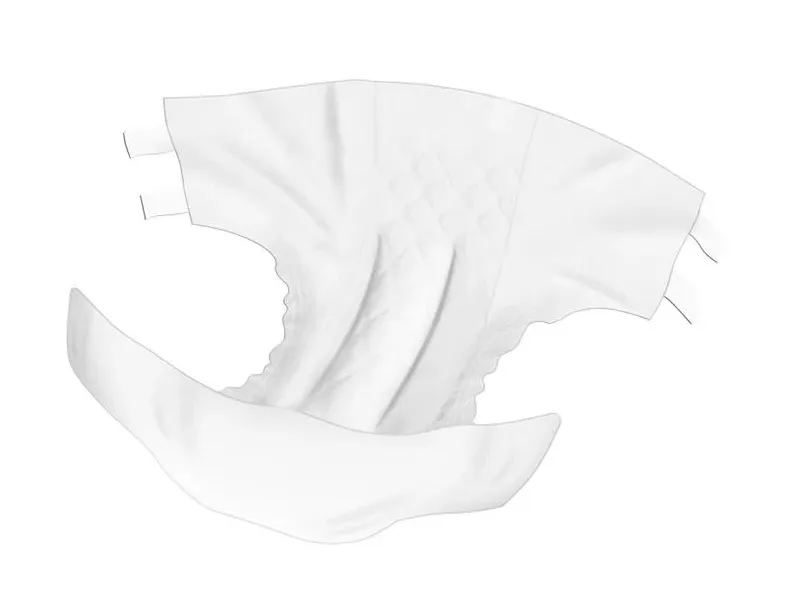
Adult Tape Diapers
Adult tape diapers are an important category for users with moderate to heavy incontinence and those who require assistance with changing. Refastenable tabs allow caregivers to open, inspect and reseal the product without fully removing it, making this format suitable for institutional care and home nursing settings. Within a product portfolio, tape diapers typically cover higher absorbency requirements and provide reliable protection for users who need caregiver assistance.
Adult Pull-Up Pants
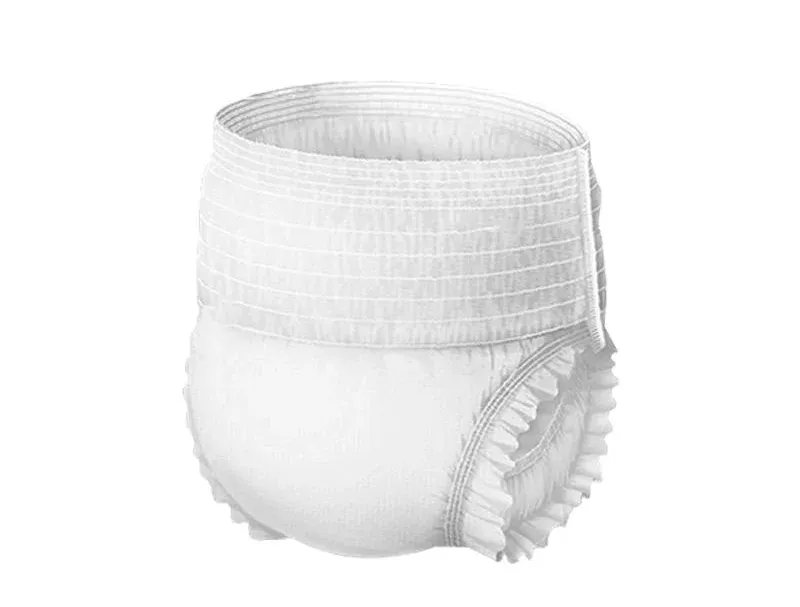
Adult pull-up pants are designed for active users with light to moderate incontinence who prioritize discretion and independence. Their underwear-like design makes them easy to put on and remove, supporting independent toileting and everyday mobility. For many retail-focused brands, pull-up pants can become an important volume category, particularly among consumers who value a discreet fit and comfortable wear. Fit, softness and waist elasticity are therefore important considerations during product development.
Disposable Underpads
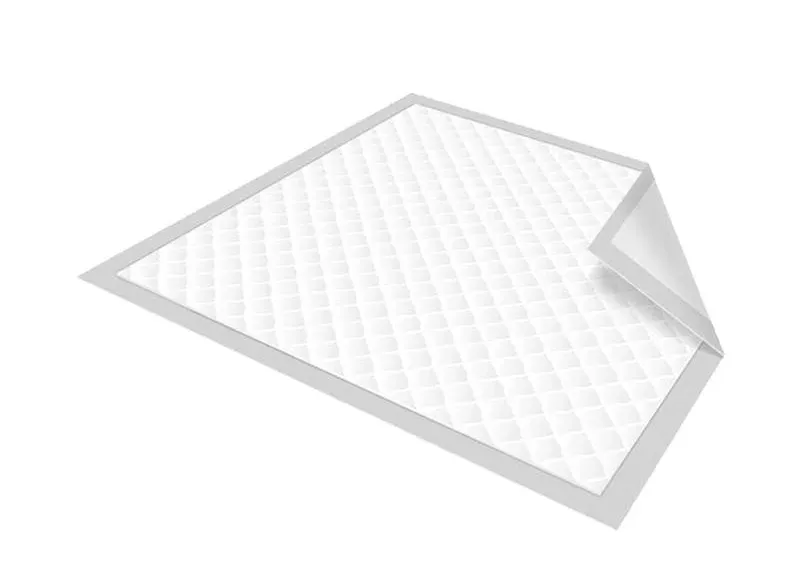
Disposable underpads protect beds, chairs and other surfaces rather than being worn by the user. They are commonly used alongside adult diapers or pull-up pants in home care and institutional settings. Including underpads in an adult incontinence product portfolio allows brands to address additional care needs and offer buyers a more complete range of complementary products. Explore our adult incontinence care products for an overview of the available categories.
Planning Product Specifications Across Different Categories
Adult incontinence product specifications should be consistent within a category and consciously different between categories, otherwise the range becomes hard to sell and harder to produce.
Size ranges should be determined by waist measurements and body shape, with the available options adapted to the target market. Medium through extra-large sizes may cover a substantial share of demand in many markets, while extended sizes can address the needs of users with different body shapes. Absorbency levels should also reflect intended use: lighter options for users who change products frequently, moderate levels for routine daily use, and higher-absorbency options for overnight wear or heavier incontinence needs.
Core construction varies by product category and absorbency requirement. Adult tape diapers may use a longer absorbent core with a suitable combination of fluff pulp and superabsorbent polymer (SAP) to support liquid absorption and retention, particularly for users who spend extended periods lying down. Adult pull-up pants generally require a narrower, anatomically shaped core that fits the body and remains stable during movement. Disposable underpads use a different construction, typically combining an absorbent layer with a liquid-impermeable backing to protect beds and other surfaces.
Backsheet selection also helps differentiate product tiers. A cloth-like breathable backsheet may be suitable for products positioned around comfort and breathability, while a standard film backsheet can support more cost-conscious product lines. Top sheet materials, waist elastics and leg cuff designs should be selected according to the same principle, balancing skin comfort, leakage protection and unit cost. Each specification should have a measurable target and a corresponding test method for verification. For more information, see our guide to adult diaper sizes and absorbency levels.
Building a Balanced Product Portfolio: Entry-Level, Mid-Range and Premium
Tiering makes an adult care product portfolio commercially useful: three tiers let a brand serve price-sensitive buyers, mainstream retail and premium accounts without three separate product families.
| Element | Entry-level | Mid-range | Premium |
|---|---|---|---|
| Material selection | Cost-effective nonwoven top sheet and standard backsheet materials | Softer top sheet and optional cloth-like breathable backsheet | Selected soft-touch materials and breathable backsheet options |
| Product performance | Basic absorbency and leakage protection for intended use | Improved rewet control, fit and wearing comfort | Enhanced absorbency, rewet control, fit and comfort based on target requirements |
| Structure complexity | Functional absorbent core with essential components | Optimized core shape, acquisition layer and elastic components | More refined core design, leg cuffs, elastics and closure systems |
| Market positioning | Price-conscious markets and selected institutional applications | Mainstream retail and pharmacy private labels | Premium retail and brands targeting higher comfort and performance expectations |
The tiers should differ in ways buyers can actually perceive: dryness, fit, softness and discretion. A premium line that only changes packaging while sharing the entry-level core invites comparison it cannot win. Differentiation is a specification decision, not a labelling one.
Private Label Customization: Specifications, Packaging and Branding
Private label adult diapers are usually developed along four axes of customization.
Product structure customization covers absorbent core design, absorbency levels, backsheet type, topsheet materials, waist and leg elastics, and fastening systems for tape diapers. Material selection should reflect the target product tier, intended use and destination market conditions, including climate and storage requirements.
Size and absorbency matrices define how many combinations the brand carries and feed directly into SKU planning, so settle them before artwork begins.
Packaging and branding cover bag or carton format, print quality, pack counts, barcodes and shelf-ready presentation, with regulatory labelling, language requirements and local claims in the same brief because they drive artwork approval timelines.
Customization also extends to product documentation, including specification sheets, performance test summaries and packaging artwork proofs for the buyer's review and approval. Clear documentation helps align product requirements, quality expectations and packaging details before mass production begins. Brands should confirm these requirements early to avoid unnecessary revisions during product development.
Managing SKUs and Production Planning for a Growing Product Line
Adult diaper SKU planning is the point where portfolio ambition meets operational reality. Every size, absorbency level and pack count is a separate SKU, each with its own packaging inventory, minimum order and forecast.
A line of three categories, three absorbency levels and four sizes already implies thirty-six combinations before pack counts are added. Few brands can support that at launch, and spreading volume across slow-moving items raises packaging minimums and complicates changeover scheduling.
A practical sequence is to launch the categories and absorbency levels that match the primary channel, add sizes where demand is proven, and introduce pack-count variants only when a channel requires them. Order allocation then follows: production batches are more efficient when a size or absorbency level repeats across markets than when each market holds a unique combination.
Forecast management is as important as SKU control. Adult care production planning depends not only on product demand but also on packaging material lead times and minimum order requirements. A rolling forecast with agreed review points helps align packaging procurement and production schedules with expected demand, reducing the risk of stockouts for core products and excess inventory for slower-moving SKUs.
Working with an OEM Manufacturer to Develop Your Product Portfolio
An adult incontinence OEM manufacturer contributes most when it is involved before the specification is fixed. The work starts with requirement confirmation: target markets, channels, categories, absorbency matrix, pack formats and regulatory constraints.
The next step is to translate these requirements into measurable product specifications. Material selection should be based on the intended product tier, performance targets and target market requirements rather than relying solely on standard catalogue options. Sample development then provides a physical reference for evaluation. Before packaging artwork is finalized, performance testing should assess key factors such as liquid absorption, rewet, leakage protection and fit under defined test conditions. For a closer look at the production stages involved, read our guide to the adult diaper manufacturing process, from raw materials to finished products.
Packaging confirmation and production validation complete the development process. Packaging barrier properties and seal integrity should be checked before the approved sample is used for production validation. Key process parameters should then be recorded to help maintain consistency between the approved sample and subsequent mass production batches.
Easy Hygienic manufactures adult diapers, adult pull-up pants and disposable underpads, supported by 35+ automated production lines. Production planning is organized according to product category and order requirements, allowing different adult care products to be developed and coordinated within one OEM or ODM programme.
Learn more about our manufacturing capabilities and production operations on our About Us page.
Adult Incontinence Product Portfolio FAQ
Which adult incontinence products should a new private label brand start with?
A new private label brand should start with the product categories that best match its target market and primary sales channel. Retail-focused brands may prioritize adult pull-up pants and tape diapers with selected absorbency levels. Brands targeting institutional care or tenders may begin with adult tape diapers and disposable underpads, where leakage protection, ease of application and caregiver workflow are important considerations. Budget, minimum order quantities and packaging requirements should also influence the initial product selection. Starting with a focused range allows brands to validate demand before expanding into additional sizes, absorbency levels and product categories.
How many SKUs should an adult care product line include?
There is no fixed number of SKUs that applies to every adult care brand. The appropriate range depends on target channels, product categories, available sizes, absorbency levels and pack formats. Brands should evaluate each combination against expected demand, minimum order quantities, packaging inventory and available working capital. A practical approach is to prioritize combinations with the strongest demand potential and introduce additional sizes or pack formats as sales data becomes available. This helps control inventory risk while allowing the product portfolio to grow in response to market demand.
Can one OEM manufacturer produce different adult incontinence products?
Yes, provided the manufacturer has the appropriate production equipment, material capabilities and capacity for each product category. Adult tape diapers, pull-up pants and disposable underpads require different converting processes and production setups. Brands should therefore evaluate the manufacturer's capabilities for each category, including available production lines, product specifications and minimum order quantities. Easy Hygienic manufactures all three product categories and operates 35+ automated production lines, supporting coordinated OEM and ODM development programmes for adult incontinence care products.
Conclusion
An adult incontinence product portfolio should begin with demand, not with a catalogue. Define the channels, select the core categories, set specifications by tier, then expand sizes and pack formats only where volume supports them. Built this way, the range stays manageable and each SKU carries a reason to exist.
As an OEM and ODM manufacturer, Easy Hygienic supports private label brands in developing adult incontinence product portfolios, from product category selection and specification planning to sample development, performance testing, packaging and mass production. Contact our team to discuss your target markets and adult care product requirements.