Across global baby care markets, tape diapers and diaper pants have coexisted for decades. For brand owners, importers and e-commerce sellers, the key question is never “which is better”, but how to allocate SKUs, specifications and price bands across formats. The differences between tape diapers, pull-up pants and training pants go beyond their wearing styles. They involve product structure, target users, material requirements, manufacturing costs and channel positioning. A wrong format choice triggers rework across packaging, shelf allocation and replenishment cycles, eroding margins far beyond unit price differences.
This product line planning guide does not advise end consumers on diaper selection. Readers will take away three core conclusions: first, format selection drives downstream costs more than price negotiation; second, the three formats generally serve different usage stages and should be planned according to their respective product positioning rather than treated as interchangeable SKUs; third, optimal format mix depends on target market and channel, not global bestseller lists.
Why the Format Decision Comes Before Price Negotiation?
Format is the foundational decision for any diaper program, as it shapes packaging dimensions, carton capacity, shelf footprint and replenishment rhythm. Switching formats post-launch requires full supply chain rework, not just product substitution. Buyers who fixate solely on unit price typically fall into three pitfalls.
First, they ignore turnover efficiency: slow-selling tape diapers tie up working capital, while depending on channel demand and packaging configuration, pull-up pants may offer different inventory turnover and logistics economics compared with tape diapers. Second, they treat pull-up pants as a premium version of tape, rather than a distinct product with unique material and production logic. Third, they mistake training pants for smaller pull-ups, overlooking their specific role in supporting the potty-training transition and their different design requirements.
The Three Formats Explained
Understanding structural differences is foundational to rational product line planning.
Tape diapers: Feature adhesive side tapes and a non-elastic waistband, applied while the baby lies down; fully repositionable and refastenable.
Pull-up pants: One-piece elastic-waist garment pulled on like underwear; non-refastenable tear-away sides for removal.
Training pants: Designed to support the potty-training transition, featuring an elastic waistband that allows children to pull them up and down independently. Depending on the product design, they may include tear-away sides, absorbency levels tailored to training needs and child-friendly prints.
| Format | Typical stage | Application | Core selling point | Typical channel |
| Tape diaper | Newborn to ~14kg; low mobility | Lay baby down, fasten side tapes; repositionable | Lowest unit cost; adjustable overnight fit | Maternity wards, pharmacies, mass retail |
| Pull-up pants | ~6–18kg; mobile toddlers | Pull up like underwear; tear off when soiled | Quick changes; elastic waist reduces active leakage | Supermarkets, baby chains, general e-commerce |
| Training pants | ~9–15kg; potty training | Child pulls up independently; caregiver uses tear-away sides | Builds independence; clear wetness signal | Premium baby stores, parent-focused e-commerce |
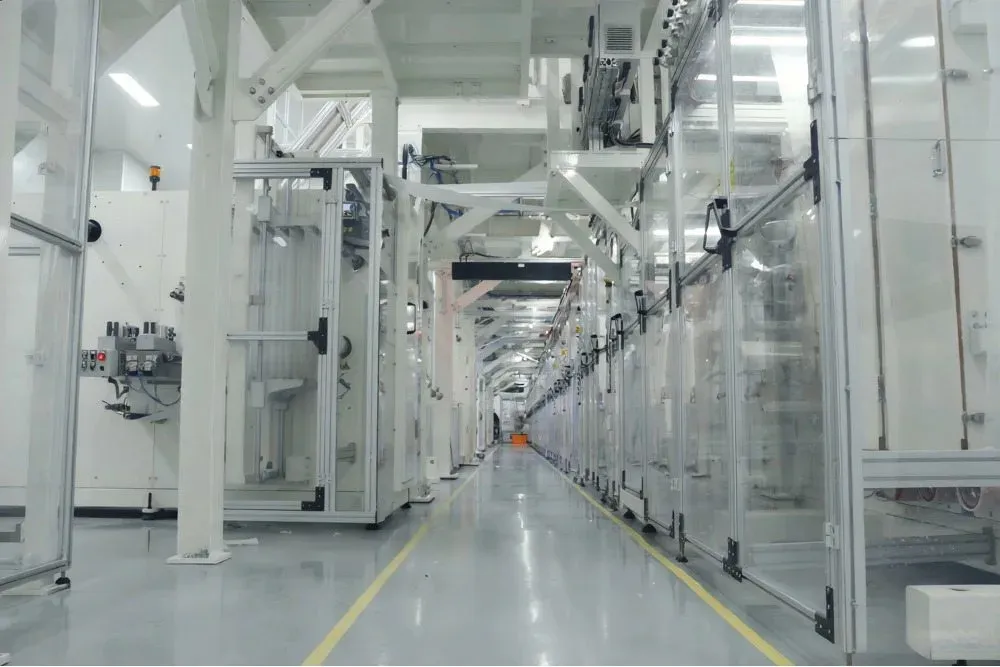
At Easy Hygienic, our tape and pant lines share an automated production platform, supporting multi-format development within one manufacturing operation. This allows brand owners to coordinate sampling, specification adjustments and quality control through a unified project workflow, without having to split their projects across different manufacturing partners.
Tape vs Pull-Up: A Side-by-Side Comparison
A common misconception is that pull-up pants are simply marked-up tape diapers. The cost difference is primarily influenced by material structure, component requirements and manufacturing processes rather than simply representing a price premium: pants require 360° elastic waistbands, leg cuffs and non-woven outer layers that tape diapers do not, and run slower due to more complex forming and cutting steps.
| Dimension | Tape diaper | Pull-up pants |
| Unit cost | Lower; fewer elastic components | Higher; elastic waist & cuffs add material cost |
| Line speed | Faster; 400–600+ pieces per minute standard | Slower; reduced speed for waistband forming |
| Package volume | Flatter profile; more pieces per carton | Bulkier; fewer pieces per cubic meter |
| Shelf logic | Priced per piece; value-driven comparison | Sold by age/size; brand & stage focus |
| Consumer perception | Value & newborn stage association | Active toddler; convenience & mobility |
| Typical complaints | Tape irritation, fit issues as baby grows | Side blow-outs, sagging, sizing jump issues |
For product line planners, the takeaway is clear: the cost difference is structural. Do not benchmark pull-up pricing against tape pricing as if they are the same product with a premium.
Where Training Pants Fit in the Range?
Training pants are often mispositioned as premium pull-ups, but they serve the potty-training transition and should be planned as a separate segment. Their design is purpose-built: elastic waistbands let children pull them up and down independently; tear-away sides allow easy caregiver removal of soiled pairs; gender-specific or character prints cater to children’s growing preferences.
Training pants may feature different absorbency levels depending on their intended use. Some designs provide moderate absorbency to support the transition from diapers to regular underwear, while others prioritize easy pull-up functionality and comfort. Brand owners should define absorbency requirements according to their target market and product positioning.
How Format Mix Differs by Market?
There is no universal tape-to-pants ratio; optimal mix depends on local retail structure, care culture and pack size norms. Use the following framework rather than fixed percentages.
North America, Western Europe & Australasia: Pants dominate supermarket and club channels (mid-to-large sizes), with strong private label programs; tape remains strong only in newborn and maternity segments.
Southeast Asia, Middle East & parts of Africa: Tape diapers lead, driven by price sensitivity, multi-child households and independent baby stores; small-pack formats turn over fastest.
E-commerce-first markets: Small mixed-format packs enable low-risk testing before full container commitment.
For new brands, weight first orders toward the dominant format among your top three target retailers, with a small test share for the alternative. Easy Hygienic's experience serving international markets allows our team to support buyers with product specifications, packaging configurations and market-oriented customization.
Sizing and Specification Differences Between Formats
Full size ladder details are covered in our Baby Diaper Size and Fit guide; this section covers only format-driven specification differences.
Tape diapers are sized primarily by weight, with repositionable tapes that accommodate a wider range of thigh sizes. Pull-up pants have fixed waist circumferences and leg openings, so the same weight label can fit differently across brands — this makes accurate waist and leg-opening measurements particularly important when developing pull-up pants across different size ranges.
When planning a pants range, focus on elastic waist stretch range and leg cuff width, as these parameters drive both leakage and skin irritation. Training pants may feature a design that supports independent pulling, with core dimensions and absorbency levels adjusted according to the intended potty-training application.
How Format Affects MOQ, Cost and Lead Time?
Three operational factors differentiate tape and pants programs, and should be factored into first-order total cost.
First, format changeover time: switching production lines requires adjusting elastic units, cutting tools and formers, with the first thousands of pieces often scrapped. This waste is amortized into unit pricing.
Second, packaging tooling: tape and pants use different bag shapes, carton dimensions and hanger holes, requiring separate print plates even with shared artwork.
Third, MOQ & lead time: MOQ is confirmed per project, based on material width, SAP grade and bag size.
Tape diapers typically allow lower per-SKU MOQ due to faster line speeds and longer material runs; pants often require slightly higher MOQ to justify elastic material setup. First pants orders also have longer lead times, as elastic waist components have minimum roll quantities.
How to Validate Samples Before Committing?
A sample check limited to thickness will miss most post-launch complaints. Run a four-dimension test on real babies, not just production line samples.
- Fit and leakage: Test on babies in your target weight band for 4–6 hours including nap time, checking side, waist and back leakage.
- Wear and removal convenience: For pants, test one-handed side tearing with a squirming toddler; for tape, test refastening after wet checks.
- Skin compatibility: Run a 72-hour panel of at least 10 babies, monitoring for red marks at the waist, leg cuffs and tape zones.
- Package opening experience: Test bag opening with wet hands and single-diaper extraction, as poor packaging design drives negative reviews even for high-quality products.
Two to three cartons per SKU is sufficient for this validation panel.
Common Mistakes When Building a Diaper Range
Five common missteps drive most post-launch underperformance for new diaper ranges:
Overloading SKUs at launch: 5 sizes × 3 formats = 15 SKUs, beyond most new brands’ turnover capacity. Start with 2 formats and 3 core sizes.
Gaps in the size ladder: Skipping sizes (e.g. jumping straight from M to XL) leaves weight bands uncovered, pushing customers to competitors during growth spurts.
Shared packaging design across formats: Tape and pants bags have different shapes and shelf features; forcing one artwork onto both causes print and shelf fit issues.
Ignoring shelf and courier constraints: Oversized cartons or bags exceeding standard shelving or courier limits silently increase fulfillment costs.
Single-format first container bets: A full container of the wrong format is hard to liquidate. Split first orders until you have actual sell-through data.
Why Easy Hygienic for Multi-Format Production?
Easy Hygienic operates 35+ fully automated production lines covering tape diapers, pull-up pants, training pants, adult/feminine care and wet wipes. Our tape and pant lines share an upstream production platform, enabling single-project development, same-facility production and single-container consolidation — no need to coordinate two factories, QC teams or document sets.
Quality is backed by a CNAS-accredited lab, 300+ in-house test items (covering absorption, re-wet, tensile strength, pH and skin safety), 13+ international certifications and service across 100+ markets, with local format norms and compliance documents on file for most destinations.
Our quality assurance and smart factory pages detail our inspection flow and line-level automation. Our OEM team handles sampling, tooling and bulk production for private label and custom programs end-to-end.

Baby Diaper FAQ
Which format sells better, tape or pull-up?
There is no universal answer — it depends on market and channel. In Western supermarkets, pants dominate mid-to-large sizes while tape leads newborn and maternity segments. In price-sensitive emerging markets, small-pack tape often outsells pants by unit volume. Benchmark the top three retailers in your target market, align your primary format with shelf leaders, and test the alternative format with a limited initial quantity, then adjust the product mix based on actual sell-through data.
Can I order both formats in one container?
Yes. Mixed containers are standard for same-factory production, requiring aligned carton dimensions, a unified loading plan, consistent shipping marks and a combined packing list for destination clearance. At Easy Hygienic, both formats are produced in-plant, so mixed containers avoid third-party consolidation costs and keep documentation centralized.
Is there an MOQ difference between tape and pull-up?
MOQ is confirmed per project, based on SAP grade, non-woven width, bag size and elastic specifications. As a general rule, tape diapers allow lower per-SKU MOQ due to faster line speeds and longer material runs between changeovers. Pants often require slightly higher MOQ, as elastic components have minimum roll quantities. Always request pricing that includes changeover waste and plate fees, not just a blanket number.
Do training pants need a separate production line?
No. Training pants run on the same pant-format lines as pull-ups; only materials and tooling change, not a dedicated production line. Manufacturers can adjust waist elastic tension, core SAP loading, side-seal specifications and outer-layer materials according to the intended training pants design. Expect a small setup and plate fee for new training pant programs, but no separate line cost.
Conclusion
Building a baby diaper product line is a format decision first, then a price decision. Tape diapers, pull-up pants and training pants serve distinct life stages with different cost structures, channel fits and risk profiles. A market-aligned format mix makes price negotiation meaningful; a mismatched mix will erode profits even at the lowest unit cost.
Follow three steps to build your range: first, map the dominant format and size ladder across your target retailers; second, sample and test 2–3 cross-format SKUs before committing to a full container; third, partner with a manufacturing partner offering multi-format production capabilities, consistent quality control and OEM customization support. To request specification sheets and samples for all three formats, visit our contact page and our OEM team will share tailored pack sizes and MOQ details for your market.