For brand owners and B2B buyers sourcing OEM baby diapers, initial inquiries often include only basic details such as size, order quantity and packaging preferences. However, disposable baby diapers are multi-layer products whose performance, cost and manufacturing requirements depend on a much broader set of specifications. Defining these requirements upfront helps reduce misunderstandings, minimize sample revisions and maintain consistency throughout private label production.
Many buyers assume that OEM baby diapers are standardized products that only require volume and size to quote. In reality, every material choice, core design and fit parameter shifts production cost, performance and compliance eligibility. This guide outlines a full framework for OEM baby diaper specifications, helping buyers build a structured baby diaper specification sheet to streamline sourcing and align manufacturing output with brand requirements.
Start with the Product Format
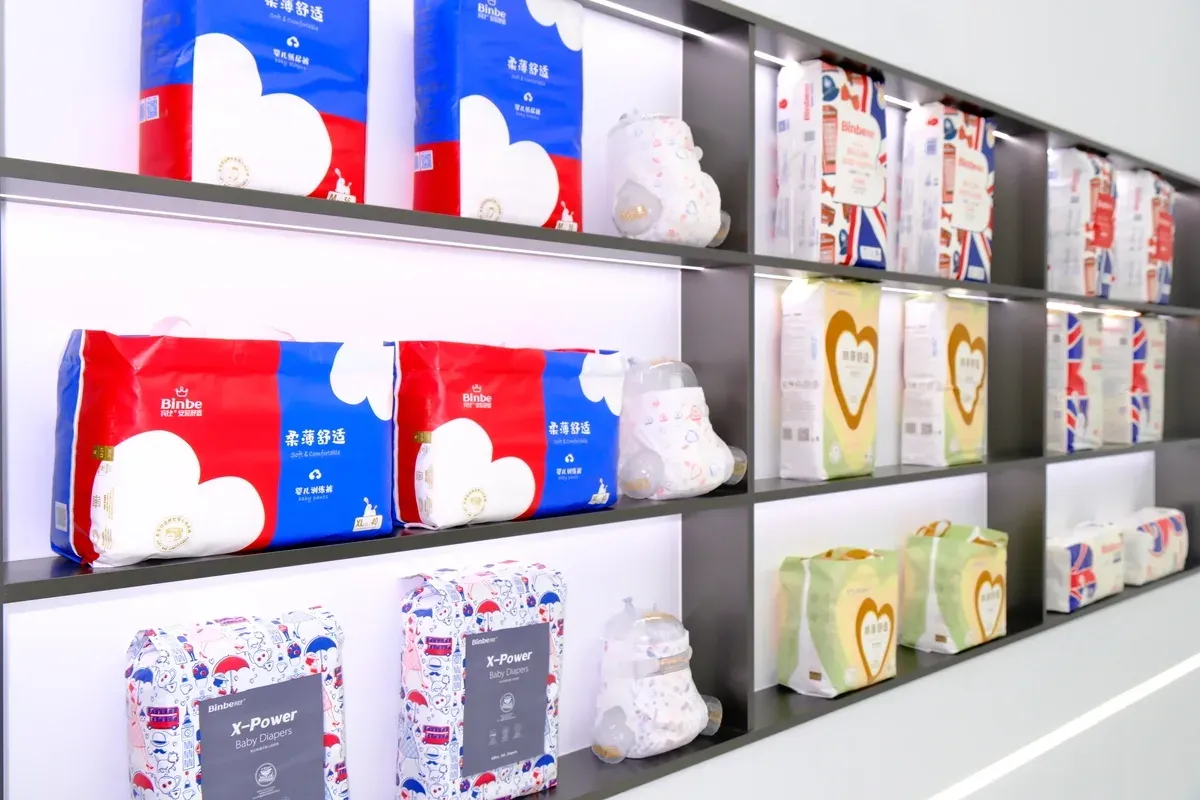
Before diving into technical parameters, buyers must first define the product format and core positioning, as these set the baseline for all other specifications. The two primary formats for baby diaper OEM projects are tape diapers (open-style diapers secured with fastening tapes) and pull-up pants (pant-style diapers designed for convenient wearing and active movement). Tape diapers are commonly used for newborns and younger infants, while pull-up pants are often preferred for older babies and toddlers who are becoming more mobile. However, the appropriate format also depends on brand positioning, target consumer preferences and market requirements.
Products can be further segmented by use case: newborn (NB) diapers with umbilical cutouts, standard everyday diapers, and overnight diapers with enhanced absorbency. Each segment calls for different core formulations, material grades and structural designs.
As a full-range baby care OEM manufacturer, Easy Hygienic supports private label baby diapers across different formats and positioning tiers, from value-focused everyday lines to premium overnight collections.
Define Size and Weight Range
Clear baby diaper size specifications are the foundation of proper fit and leakage protection. Buyers should define each SKU by its target baby weight range (e.g., NB: 0–5 kg, S: 4–8 kg, M: 6–11 kg) and key product dimensions, including unfolded length, front and rear waist width, stretched waist range, crotch width, leg opening dimensions, and absorbent core length and width. Dimensional tolerances should also be specified to establish acceptable variations during mass production.
Size specifications should also note waist and leg elastic parameters to match regional body type preferences. Inaccurate size definitions are a leading cause of fit-related leakage complaints and packaging fit issues during mass production.
Define Absorbency and Core Requirements
Absorbency is the core functional metric of baby diapers, and the most common source of expectation gaps in OEM projects. Buyers should define the target absorbency performance of each product, including total absorption capacity, liquid acquisition time, rewet performance, leakage protection and core structure. Where applicable, specifications should also cover SAP and fluff pulp composition, core weight, core dimensions and wet integrity. Each performance target should be accompanied by an agreed test method, test conditions and acceptance criteria to ensure that samples and mass-produced products can be evaluated consistently.
Buyers should also consider the trade-offs between traditional full-fluff cores and thin composite cores. Full-fluff structures may offer a different balance of softness, flexibility and absorbency, while thin composite cores are designed to achieve a slimmer product profile. The appropriate structure should be selected according to performance targets, product positioning and cost expectations.
Absorbent core specifications typically fall into two categories: traditional full-fluff cores for a different balance of absorbency and softness, and thin composite cores for a slim, lightweight profile. For a detailed breakdown of core materials and performance trade-offs, refer to our full guide to baby diaper raw materials.
Specify Topsheet, ADL and Backsheet Materials
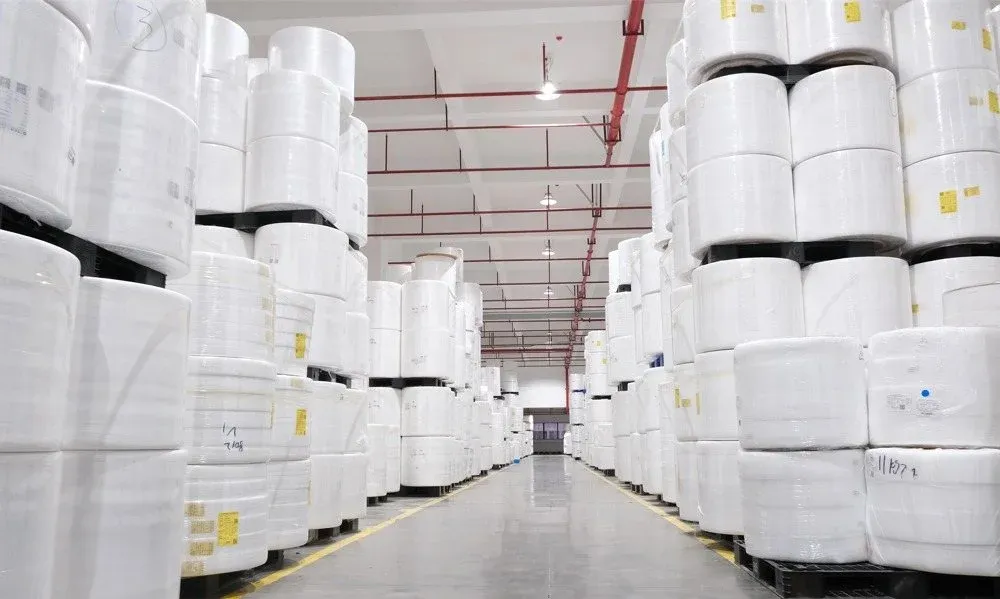
Material specifications play an important role in determining diaper softness, liquid management, breathability, durability and overall production cost. Buyers should define the material type, basis weight (GSM), key physical properties and functional requirements for each layer. When exact material grades have not been selected, manufacturers can recommend suitable options based on the required product performance and target cost.
| Material Layer | Specifications to Confirm |
|---|---|
| Topsheet | Material type, GSM, softness, hydrophilic treatment |
| ADL | Material type, GSM, thickness and liquid distribution |
| Backsheet | PE film or breathable film, GSM, breathability |
| Absorbent Core | SAP and fluff pulp composition, core weight and structure |
| Elastic Components | Material type, strand count and stretch performance |
| Fastening System | Tape type, adhesive performance and repositionability |
It is recommended to also state whether pre-approved alternative materials are acceptable, to improve supply chain resilience and avoid production delays.
Define Fit, Elastic and Fastening Requirements
Fit performance directly impacts wear comfort and leakage prevention, yet these parameters are often overlooked in initial inquiries. Key specifications include waistband construction (full elastic or semi-elastic), leg cuff height, elastic strand count, stretch and recovery performance, fastening tape type (hook-and-loop or adhesive), fastening strength and frontal tape (landing zone) dimensions. Buyers should also define acceptable fit and leakage protection expectations for each size range.
Well-defined baby diaper fit and diaper elastic specifications ensure consistent fit across production batches and reduce consumer complaints about sagging, red marks or side leakage.
Define Packaging and Pack Count
Private label baby diaper packaging is a key part of brand identity and retail readiness. Buyers should define the number of pieces per pack, packaging material, bag dimensions, printing requirements, primary language, labeling content, barcode specifications and outer carton configuration. Artwork approval, packaging tolerances and carton labeling requirements should also be confirmed before mass production.
Packaging specifications should also cover secondary packaging details such as pack count per carton, carton weight limits and pallet configuration, to align with logistics and retail requirements. Clear diaper packaging requirements reduce rework and ensure shelf-ready output.
For more information about packaging decisions in private label projects, buyers can also refer to our guide to private label baby diaper packaging.
Include Target Market and Compliance Requirements
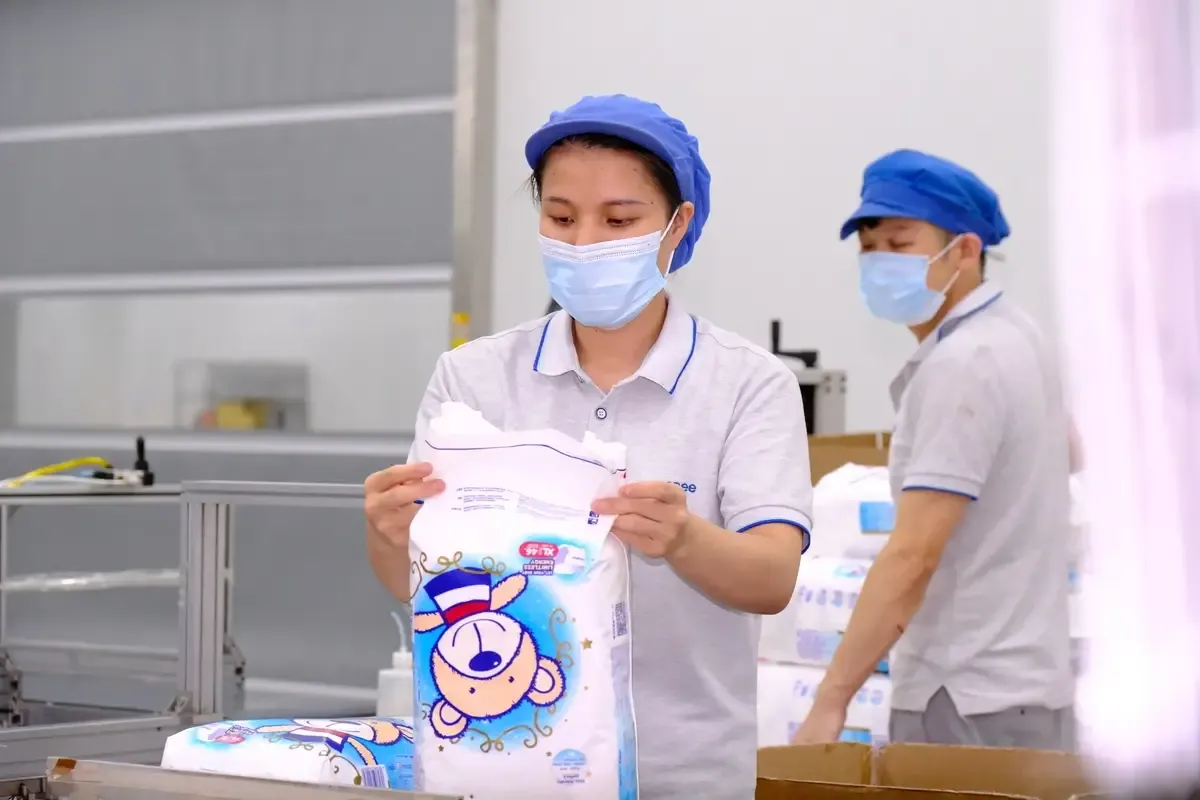
Target market requirements directly shape material selection, testing and certification needs. Buyers should specify the destination country, mandatory labeling rules, required safety certifications and testing standards for private label baby diapers.
Regulatory and product safety requirements vary by destination market. For products intended for the EU market, buyers should review applicable requirements under REACH and general product safety legislation, as well as relevant labeling and chemical substance restrictions. For the US market, applicable CPSC requirements and other relevant federal or state requirements should be assessed according to the product and its intended claims. Buyers should confirm the required testing, documentation and compliance responsibilities before production. Easy Hygienic supports OEM projects with relevant product testing documentation and quality information to help clients evaluate applicable market requirements.
Buyers can learn more about Easy Hygienic's quality control capabilities when evaluating manufacturing and quality requirements for an OEM project.
Define Quantity, MOQ and Production Requirements
Volume and order structure influence pricing, tooling and production scheduling. Buyers should provide the estimated annual order volume, initial order quantity, number of SKUs, expected quantity per size, trial order requirements and projected scale-up plans. It is also useful to clarify whether quantities will be allocated across different sizes, product formats or packaging configurations, as these factors may influence production planning and MOQ arrangements.
While exact MOQ figures vary by product and configuration, sharing clear OEM diaper order quantity and volume forecasts helps manufacturers optimize production arrangements and offer accurate pricing.
Common Mistakes Buyers Make When Preparing Baby Diaper Specifications
1. Defining Size Only by Baby Weight
Baby weight ranges provide a useful starting point, but they do not fully define product fit. Buyers should also confirm product dimensions, waist measurements, leg openings and acceptable dimensional tolerances to ensure consistent fit across different sizes.
2. Setting Absorbency Targets Without Test Methods
Absorbency figures alone may not provide a reliable basis for product comparison. Buyers should specify the test method, liquid type, test conditions and acceptance criteria when defining absorption capacity, acquisition time and rewet performance.
3. Specifying Materials Without Considering Performance
Selecting materials based only on names or basis weight may lead to differences in softness, liquid distribution and product durability. Material choices should be evaluated together with their functional requirements and overall product positioning.
4. Changing Specifications After Sample Approval
Unapproved changes to materials, core structures, dimensions or packaging after sample confirmation can affect product consistency and production planning. Any significant changes should be reviewed, documented and approved before implementation.
What a Complete Baby Diaper Specification Sheet Should Include
A structured baby diaper specification sheet centralizes all parameters and serves as the baseline for quotation, sampling and mass production. Below is a core checklist of items to include:
| Category | Specifications to Confirm |
|---|---|
| Product Format | Tape diaper / pull-up pants, product positioning, intended use |
| Size & Fit | Baby weight range, product dimensions, waist and leg measurements, dimensional tolerances |
| Core & Absorbency | Core structure, target absorption capacity, acquisition time, rewet performance, test methods |
| Materials | Topsheet, ADL, backsheet, SAP, fluff pulp, elastic and fastening materials |
| Fit & Fastening | Waistband construction, leg cuffs, elastic recovery, tape strength, landing zone |
| Packaging | Pieces per pack, packaging material, bag dimensions, artwork, barcode, carton configuration |
| Compliance | Destination market, applicable regulations, labeling and testing documentation |
| Order & Production | SKU count, quantity per size, initial order volume, MOQ, production schedule |
| Quality Requirements | Acceptance criteria, sample approval, dimensional tolerances, change control |
This checklist covers the core OEM baby diaper requirements that allow manufacturers to provide accurate quotes and representative samples.
How Easy Hygienic Uses Product Specifications in OEM Projects
As an experienced OEM baby diaper manufacturer, Easy Hygienic uses the approved product specification sheet as the reference document throughout each project stage. When receiving a buyer's requirements, our team reviews material selection, product dimensions, absorbency targets, packaging configurations, manufacturing feasibility and applicable market requirements before quotation and sample development.
Once the specifications are reviewed and confirmed, Easy Hygienic proceeds with sample development based on the agreed material selections, product dimensions and performance targets. After sample approval, the confirmed specifications are maintained as the reference for mass production.
FAQ
Q1: What should be included in a baby diaper specification sheet?
A complete baby diaper specification sheet should cover product format, size range, absorbency and core design, material specifications for each layer, fit and fastening requirements, packaging details, compliance standards and volume projections.
Q2:What information does an OEM diaper manufacturer need to quote accurately?
An OEM baby diaper manufacturer typically needs information about product format, size range, material preferences, absorbency targets, packaging requirements, target market and estimated order quantities. Buyers should also clarify which specifications are fixed and which can be recommended by the manufacturer. At Easy Hygienic, our team reviews these requirements to help determine product feasibility and quotation details.
Q3:Can diaper specifications be fully customized for private label?
Yes. Private label diaper specifications can be customized to match brand positioning, target market preferences and performance targets. Easy Hygienic offers customization across product layers, structures and packaging options.
Q4:What should I define before requesting an OEM quote?
Before requesting an OEM baby diaper quote, define product format, size ranges, absorbency targets, layer material standards, fit parameters, packaging rules, target market compliance, and estimated order volume. Clear baby diaper specifications streamline quoting and align pricing with your private label diaper requirements.
Conclusion
Clear, detailed OEM baby diaper specifications are the foundation of efficient, low-risk OEM product development. The more precisely buyers define performance, materials, fit and compliance requirements upfront, the easier it is for manufacturers to deliver accurate pricing, representative samples and consistent mass production.
Working with a structured specification sheet reduces miscommunication, cuts sample revision cycles and ensures that final private label products match brand expectations. For support building your custom baby diaper specification sheet or requesting a project quote, contact Easy Hygienic today.