A diaper specification that performs well in one market does not automatically perform well in another. Temperature, humidity, seasonal clothing and the conditions imposed by containers and warehouses all influence how a product behaves in use and how stable it remains in storage. For exporting brands, this turns specification work into a design question: which elements can travel unchanged across markets, and which need to be reworked for the destination.
This article examines how climate conditions influence baby diaper design and product specifications for different markets. It distinguishes between the wearing environment and the supply-chain environment, covering how temperature, humidity and seasonal conditions affect material selection, product structure, packaging and performance testing. For OEM brands, understanding these factors helps determine which specifications can remain consistent across markets and which may require customization.

Why Climate Conditions Matter in Baby Diaper Product Development
Two environments matter in baby diaper product development, and they are frequently confused. The wearing environment is the temperature, humidity and clothing a baby experiences; the supply-chain environment is the container, warehouse and retail shelf on the way there. The first affects comfort and perceived dryness, the second affects material stability, packaging integrity and shelf life.
In the wearing environment, temperature, humidity and clothing layers can influence how a diaper feels against the baby's skin, how moisture vapor passes through the back sheet and how much heat builds up around the waist. In the supply chain, temperature fluctuations, moisture exposure and prolonged stacking pressure may affect material stability, packaging integrity and the overall condition of the product before it reaches retail shelves.
Climate is still only one input: consumer habits, change frequency, price positioning, local regulations and available materials usually shape a specification more than ambient temperature alone, so designs should follow documented market requirements rather than climate labels.
Baby Diaper Design for Hot and Humid Climates
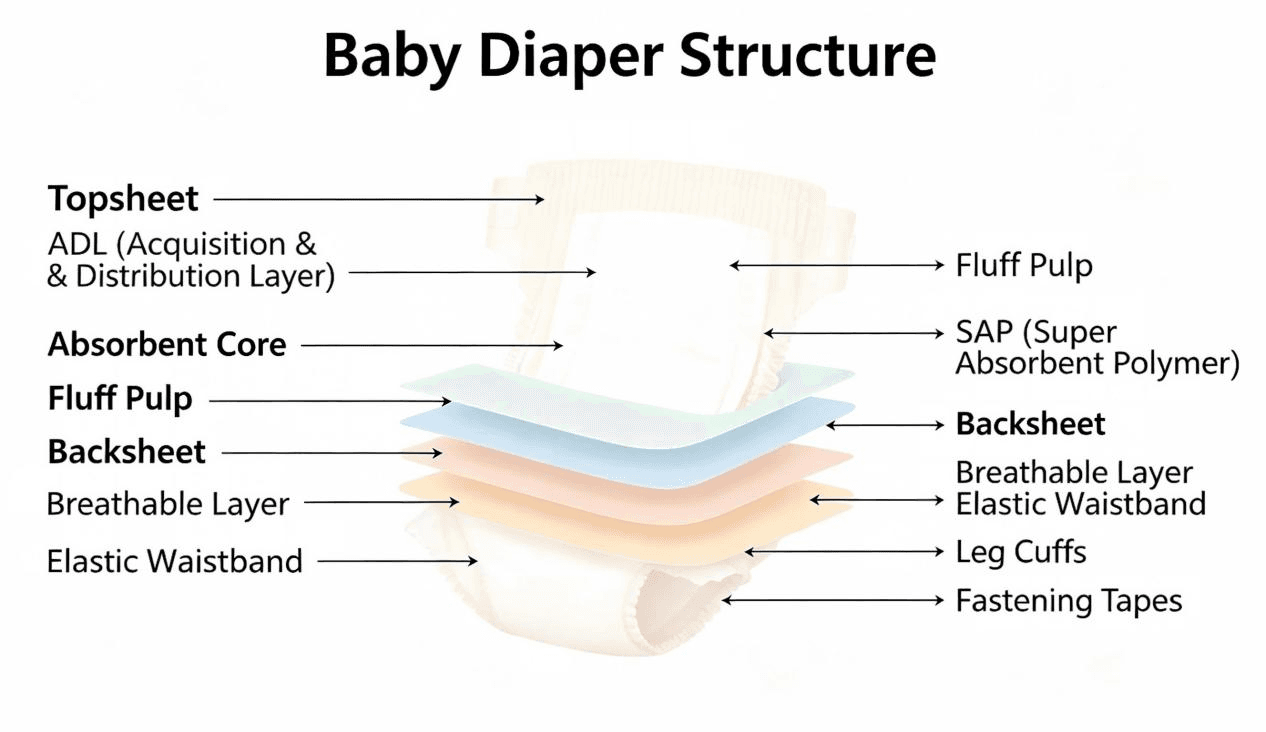
In hot and humid markets, breathability is an important consideration in baby diaper design, particularly when selecting the back sheet. Microporous films and nonwoven laminates offer different moisture vapor transmission properties and surface characteristics. The choice should depend on the target product positioning, required breathability, leakage protection and the environmental conditions the product is expected to encounter.
The top sheet matters as much. Aperture pattern, fiber denier and hydrophilic treatment influence how quickly liquid passes through and how dry the surface feels between changes. Waist elasticity and leg cuff fit also carry weight, because heat and sweat make a loose or over-tight fit more noticeable, and both affect how the product sits during movement.
However, breathability alone does not guarantee a cool or comfortable wearing experience. Air permeability, moisture vapor transmission, absorbency, fit and changing frequency all contribute to overall diaper performance. A breathable back sheet must work together with an effective absorbent core and a well-designed product structure. For this reason, material selection should be supported by performance testing under defined conditions rather than based on breathability as a single indicator of comfort.
Baby Diaper Design for Hot and Dry Climates
In hot and dry markets, product development often places greater emphasis on absorbency, surface dryness and material softness. The choice of top sheet and back sheet should consider skin contact, flexibility and overall hand-feel, particularly when the product is intended for daily use in warm conditions. Static electricity during converting and packaging may also need to be considered, depending on the materials used and the production environment.
Absorption speed and rewet performance remain important considerations because surface dryness directly influences the wearing experience between diaper changes. Fit also deserves attention. In warmer conditions, babies may wear lighter clothing, making proper waist and leg fit important for maintaining product positioning during movement. Elastic structures should provide a secure fit without excessive pressure, supporting both comfort and leakage protection.
Climate should not be translated directly into an absorption requirement: a dry climate does not by itself call for a higher-capacity core, since feeding volume, change intervals and product positioning decide that.
Baby Diaper Design for Cold and Seasonal Climates
Cold markets introduce a different variable: clothing. Multiple layers compress the product against the body, which changes how the core and cuffs behave, and heavier garments reduce airflow around the waist.
Thickness becomes a trade-off rather than an advantage, since a bulky product under tight layers can bunch and shift.
Fit and structure therefore lead the specification. Waistband elasticity that recovers well under compression, leg cuffs that maintain contact without marking skin, and a core that does not bunch when squeezed all matter more than nominal thickness. Many brands address seasonal variation by defining one specification that covers the extremes, and only split into seasonal variants when the volume justifies it.
Storage and transportation also require attention when products move between regions with different temperature conditions. Temperature fluctuations during transit may create condensation inside containers, potentially affecting cartons and outer packaging. For long-distance shipments, brands should consider packaging protection, storage conditions and product stability throughout the transportation process. These factors are particularly important when developing specifications for international export markets.
Selecting Materials and Structures for Different Market Requirements
Material selection for baby diaper materials is a balancing exercise across four groups. The top sheet sets the first impression and much of the dryness perception; the acquisition layer and core determine speed, capacity and rewet; the back sheet decides breathability, softness and leakage protection; elastics and fastening systems determine fit and how long it holds.
Each material choice involves trade-offs between product performance and manufacturing cost. The proportion and distribution of SAP in the absorbent core influence liquid absorption capacity, acquisition performance and rewet behaviour. Microporous back sheets can provide higher moisture vapor transmission than conventional films, depending on the material construction, while premium nonwoven top sheets may improve softness and hand-feel at a higher material cost. The most suitable combination should reflect the brand's target market, product positioning and performance requirements rather than simply selecting the highest-grade materials.
Material selection should therefore document the target performance for each group, test candidate combinations against it, and record why each material was chosen, so the same platform can be extended to a new market later.
Packaging and Storage Considerations Across Different Climates
Baby diaper packaging has to protect the product, not only present it. Sealed film bags with adequate moisture barrier, well-controlled seal strength and consistent compression keep the stack stable and limit moisture ingress during long transit.
Warehouse conditions are just as important as packaging design. High humidity can weaken carton strength and affect the condition of packaging materials, while prolonged exposure to elevated temperatures may influence the stability of certain adhesives and films. During container shipments, temperature fluctuations, potential condensation and prolonged stacking pressure should also be considered. These factors can affect packaging integrity and the condition of baby diapers before they reach the destination market.
A practical specification states the storage conditions the product is designed for, the intended shelf life and the packaging tests supporting both. Where destinations differ widely, private label baby diaper packaging may need regional variants, such as a higher barrier film, even when the diaper itself is unchanged.
Testing Baby Diaper Performance Under Different Environmental Conditions
Testing should reproduce the conditions the product will meet, not the conditions of the laboratory's convenience. Baby diaper performance testing therefore starts by defining the conditioning profile: temperature, relative humidity and duration, chosen from the destination market and the storage route rather than from a default setting.
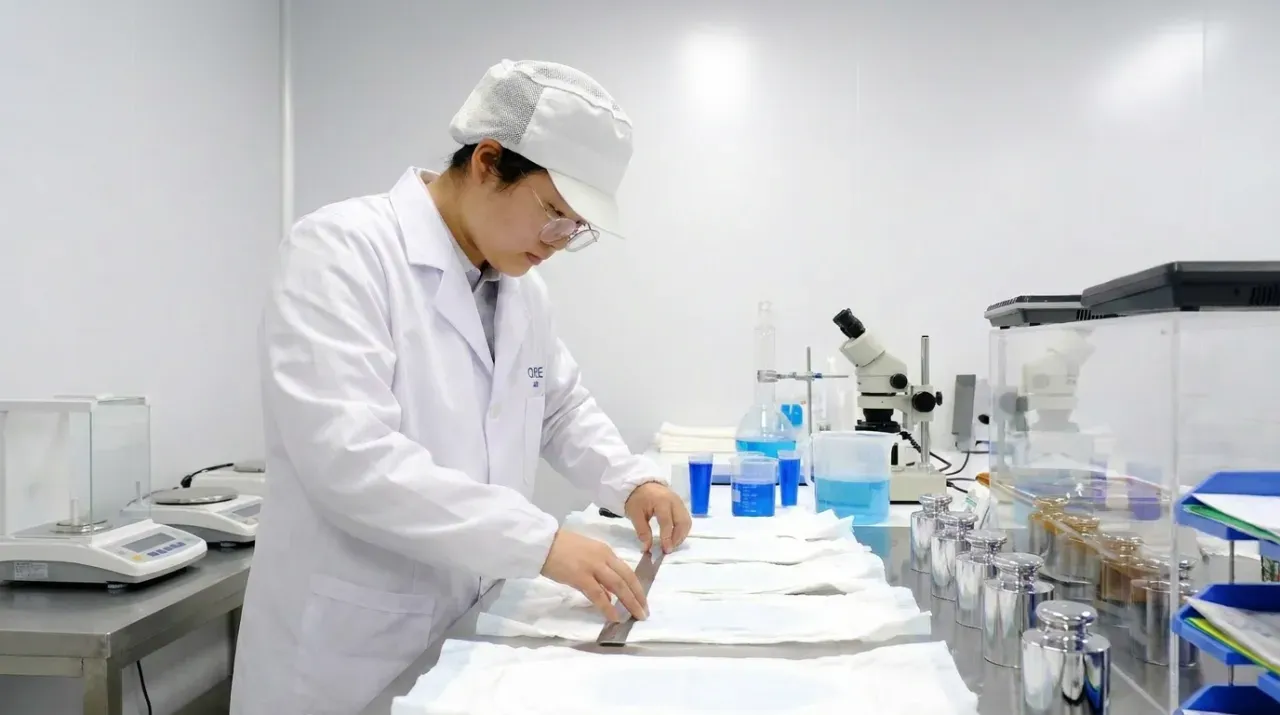
Absorption and rewet performance can be evaluated after conditioning samples under defined temperature and humidity conditions. These conditions help assess how the product performs in different environments. Breathability is commonly evaluated through moisture vapor transmission rate (MVTR) testing of the back sheet under controlled conditions. Packaging stability should be assessed separately through relevant tests, including seal integrity, barrier performance and compression resistance. Where accelerated storage testing is used, the conditions and evaluation criteria should be documented to support consistent comparisons.
Test conditions must be fixed by the product requirement and documented alongside the results; two reports with different conditioning profiles are not comparable.
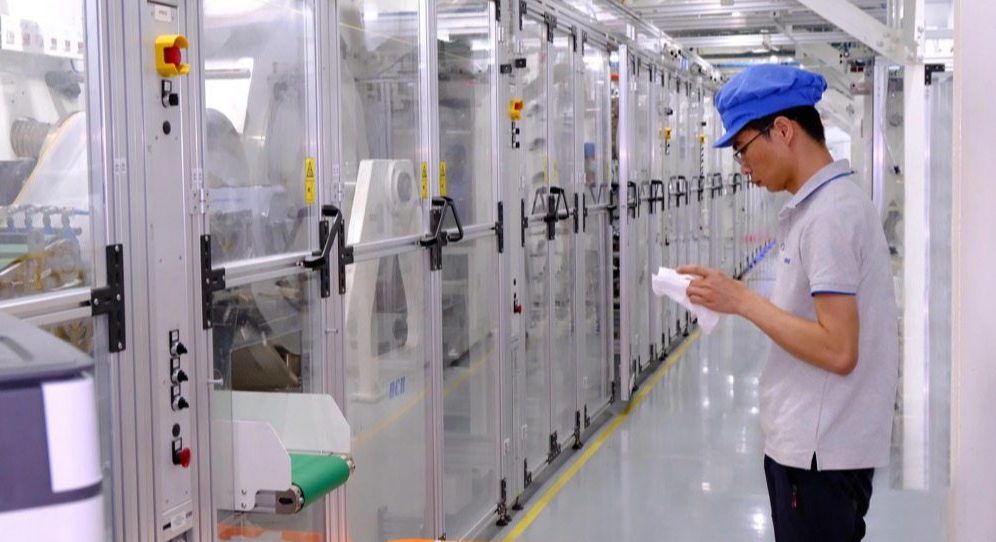
As an experienced baby diaper manufacturer since 2012, Easy Hygienic supports OEM and ODM projects for international baby care brands. Our capabilities include material selection, customized baby diaper specifications, sample validation and packaging development to meet different market requirements. Explore our baby diaper products and customization capabilities on our Baby Care page.
Inside Easy Hygienic: Baby Diaper Manufacturing and OEM Capabilities:
Developing Market-Specific Baby Diaper Specifications for OEM Brands
Developing market-specific baby diaper specifications for OEM brands requires a structured process. The first step is to understand the target market and collect the relevant requirements, including local climate conditions, transportation and storage environments, consumer usage patterns, product positioning, regulatory and labelling requirements, and preferred packaging formats. These factors provide the basis for determining which product specifications can remain standardized and which may require market-specific adjustments.
The next step is to define measurable product specifications, including target performance for absorption, rewet, leakage protection, breathability and fit, together with the test methods and conditions used for verification. Materials and product structures are then selected to meet these requirements rather than simply choosing components from a standard catalogue. Samples are developed and evaluated under conditions representative of the intended market and usage environment.
The final stage covers packaging confirmation and production validation. Packaging materials are evaluated for barrier properties and sealing performance, while the approved sample is used as the reference for production verification. Relevant process parameters and quality checkpoints should be documented to help maintain consistency between the approved sample and subsequent mass production.
Baby Diaper Design FAQ
Do baby diapers need different specifications for different climates?
Not necessarily. Baby diaper specifications should be based on actual market requirements, usage conditions and performance test results rather than climate alone. Hot and humid markets may place greater emphasis on breathability and surface dryness, while colder markets may require closer attention to fit under layered clothing and product stability. Core absorbency requirements should be determined by usage patterns, changing frequency and product positioning. Testing can help brands determine whether one specification is suitable for multiple markets or whether regional variations are necessary.
How does climate affect baby diaper material selection?
Climate can influence how brands evaluate materials for baby diaper design, particularly the top sheet, back sheet, absorbent core and elastic components. In hot and humid markets, moisture vapor transmission, surface dryness and fit may receive greater attention. In hot and dry conditions, softness, flexibility and material hand-feel can be important considerations. Material selection should also account for absorbency, leakage protection, product positioning and manufacturing cost. The final combination should be validated through appropriate performance testing.
What should brands consider when developing custom baby diapers for different markets?
Brands should first identify their target market, consumer requirements, product positioning and expected performance standards. They should then work with an experienced OEM manufacturer to define product specifications, select suitable materials and structures, evaluate samples and confirm packaging requirements. Testing under representative environmental conditions helps verify whether the proposed design meets the intended requirements. Production validation is also important to ensure consistency between approved samples and mass-produced products.
Conclusion
Baby diaper design for global markets is not a matter of matching a material to a climate label. It is a matter of defining the wearing environment, the supply-chain environment, the product positioning and the cost target, then verifying each decision with test data. Brands that document this process can move a platform across markets with controlled changes instead of rebuilding it each time.
Easy Hygienic supports OEM and ODM projects for international baby care brands, covering material selection, product specification development, sample validation and packaging customization. Whether you are developing a new baby diaper range or adapting an existing product for a different market, our team can help evaluate your requirements and explore suitable product solutions. Contact us to discuss your target market and baby diaper customization project.